
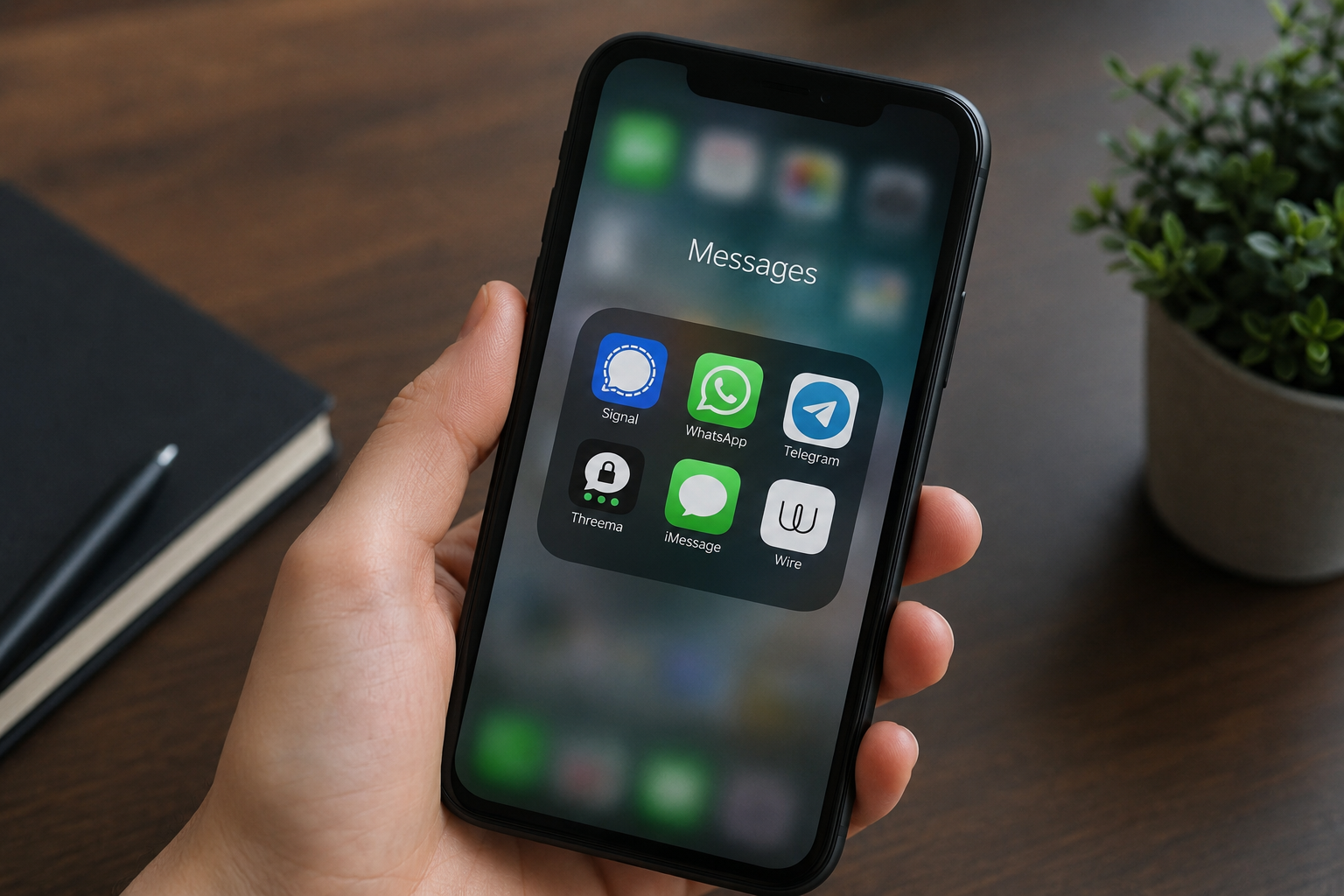
Best Encrypted Messaging Apps Compared: Which Messaging Platform Protects Your Privacy the Most?
In today’s digital world, messaging apps have become one of the most important ways people communicate. From personal conversations and family chats to business discussions and financial information, billions of private messages are exchanged every day. However, with increasing concerns about data tracking, cyber threats, and online surveillance, users are becoming more aware of how their conversations are protected.
Encryption has become a key feature that separates secure messaging apps from ordinary communication platforms. End-to-end encryption (E2EE) ensures that messages are converted into a secure format that only the sender and receiver can read. Even the company operating the app cannot access the content of these conversations. While many apps claim to offer privacy, their security models, data policies, and features can differ significantly.
This comparison explores some of the best encrypted messaging apps available today and examines their privacy features, strengths, limitations, and ideal users.
What Makes a Messaging App Secure?
Before comparing apps, it is important to understand what actually makes a messaging platform private. The most important feature is end-to-end encryption, which protects messages while they travel between devices. A secure messaging app should also minimize data collection, protect user identity, offer strong authentication options, and regularly update its security systems.
Another important factor is metadata protection. Even if the content of messages is encrypted, information such as who you contact, when you communicate, and how often you use the app can reveal personal patterns. Some privacy-focused apps work harder to reduce the amount of metadata they collect.
Signal: The Gold Standard for Private Messaging
Signal is widely considered one of the most secure messaging apps available. Developed by the nonprofit Signal Foundation, the app focuses almost entirely on privacy and security rather than advertising or user data monetization.
Signal uses its own Signal Protocol, which has become one of the most respected encryption technologies in the industry. The same protocol has also influenced security systems used by other major messaging platforms.
The app provides end-to-end encryption for messages, voice calls, video calls, and group chats by default. It also includes features such as disappearing messages, screen security, encrypted backups, and username-based communication options that reduce the need to share a phone number.
One of Signal’s biggest advantages is its privacy-first business model. The organization does not rely on advertising revenue, meaning it does not have the same incentive to collect user data for targeting purposes.
The main limitation of Signal is its smaller user base compared with mainstream messaging apps. Convincing friends, family, or professional contacts to switch can sometimes be difficult. However, for users who prioritize privacy above everything else, Signal remains one of the strongest choices.
WhatsApp: Popular, Convenient, But With Privacy Questions
WhatsApp is one of the world’s most widely used messaging platforms, with billions of users globally. It provides end-to-end encryption for personal messages, calls, and group conversations using technology based on the Signal Protocol.
The biggest advantage of WhatsApp is convenience. Since so many people already use it, communication is simple without asking contacts to install another application. It also offers features like encrypted backups, disappearing messages, voice messages, communities, and business communication tools.
However, privacy discussions around WhatsApp are more complicated because it is owned by Meta Platforms. While message content is encrypted, Meta collects certain types of user information, including metadata and usage-related data depending on settings and policies.
For many users, WhatsApp offers a balance between strong encryption and everyday usability. It is secure for normal private conversations, but users who want maximum anonymity may prefer alternatives focused entirely on privacy.
Telegram: Feature-Rich Messaging With a Different Encryption Model
Telegram is known for its speed, large groups, channels, file-sharing capabilities, and cloud-based messaging system. It has become popular among communities, businesses, creators, and large online groups.
Telegram provides encryption, but its approach is different from Signal and WhatsApp. Regular Telegram chats use client-server encryption, meaning messages are encrypted between the user and Telegram’s servers. End-to-end encryption is available through a feature called Secret Chats, but it is not enabled by default.
This difference is important because many users assume all Telegram conversations have the same level of protection. Secret Chats provide stronger privacy with features like self-destructing messages, but normal chats do not offer the same end-to-end encryption standard.
Telegram’s strength lies in functionality. It supports massive groups, bots, channels, large file transfers, and customization options. For users who value features and communities, it is highly attractive. For users seeking maximum privacy by default, other apps may be more suitable.
iMessage: Strong Security Within the Apple Ecosystem
iMessage is Apple’s messaging service designed for communication between Apple devices. It offers end-to-end encryption for messages, attachments, and calls between compatible devices.
A major advantage of iMessage is its integration with the Apple ecosystem. Security features are deeply connected with Apple hardware and software, including device encryption and biometric authentication through Face ID or Touch ID.
Apple has also introduced stronger privacy features such as encrypted iCloud backups for users who enable advanced data protection settings.
However, iMessage has a major limitation: it works best inside Apple’s ecosystem. Conversations with non-Apple users often move to standard SMS or other messaging systems, which may not provide the same encryption protections.
For Apple users communicating mainly with other Apple users, iMessage provides a secure and seamless experience.
Threema: Privacy Without Requiring a Phone Number
Threema is a privacy-focused messaging app based in Switzerland. Unlike many messaging platforms, it does not require users to connect their identity directly to a phone number.
The app offers end-to-end encrypted messages, calls, group chats, and file sharing. It also collects very little user data and focuses on privacy by design.
A unique feature of Threema is its anonymous account system. Users can create an account without revealing a phone number or email address, which provides an additional privacy layer.
The downside is that Threema is a paid application, which means adoption is lower compared with free alternatives. However, its business model avoids dependence on advertising and user tracking.
Wire: Secure Communication for Businesses
Wire is another encrypted communication platform that focuses heavily on professional and enterprise users. It provides secure messaging, voice calls, video conferencing, and collaboration tools.
Wire is designed for organizations that require privacy, compliance, and secure internal communication. It supports end-to-end encryption and provides features suitable for teams and companies.
While it is not as popular for everyday personal messaging, it has gained attention among businesses that need stronger control over communication security.
Session: Messaging Without Phone Numbers
Session is designed around anonymity and privacy. Unlike traditional messaging apps, it does not require a phone number or email address to create an account.
Session uses a decentralized network approach and focuses on reducing metadata exposure. It provides encrypted messaging and aims to make tracking users more difficult.
Its biggest advantage is anonymity, but the trade-off is that the user experience and adoption are not as smooth as mainstream platforms.
Comparison: Which Encrypted Messaging App Is Best?
When comparing encrypted messaging apps, there is no single winner for every user. The best choice depends on what someone values most.
Signal is the strongest option for users who want maximum privacy and open security standards. WhatsApp is ideal for people who want strong encryption while staying connected with the largest number of users. Telegram is better for communities, channels, and advanced features but requires users to understand its encryption limitations.
iMessage works best for Apple users, while Threema and Session appeal to people who want stronger anonymity. Wire is more suitable for professional communication environments.
Final Verdict: Choosing the Right Secure Messaging App
Privacy has become one of the most important factors when choosing digital communication tools. Encryption protects conversations, but privacy also depends on company policies, data collection practices, and how an app is designed.
For most privacy-conscious users, Signal remains the strongest recommendation because of its transparent security approach and minimal data collection. For everyday users who need convenience, WhatsApp provides reliable encryption with a much larger network. Users who need anonymity or specialized privacy features may prefer apps like Threema or Session.
As online threats continue to evolve, encrypted messaging is no longer just a feature for security experts. It has become an essential part of protecting personal information in the modern digital world.

Software Developer & Writer
Hey, I'm Diva, a developer and writer blending code and creativity. I'm driven by a deep curiosity and a relentless pursuit of excellence. Join me as I craft digital solutions and captivating stories.




Leave A Comment