
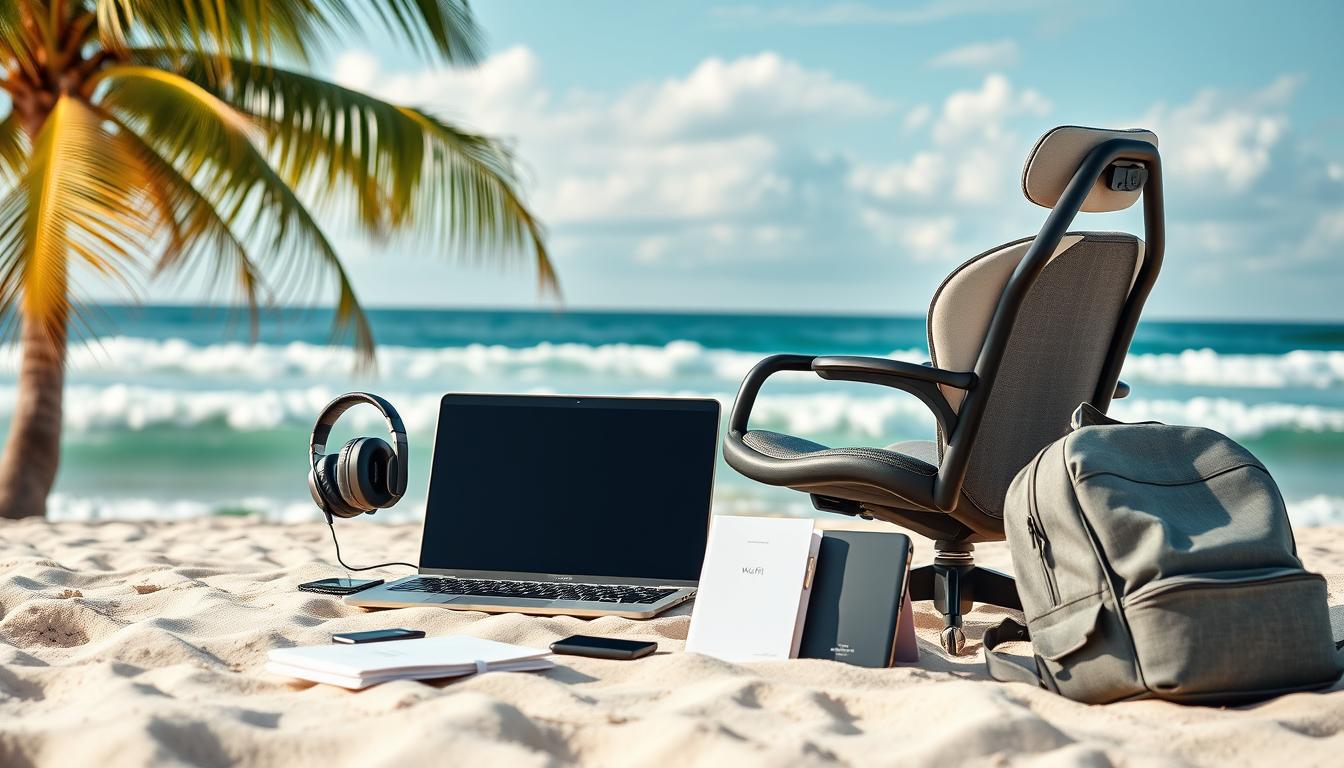
5 Essential Gadgets Every Digital Nomad Needs for Work, Travel and Life on the Move
The digital nomad lifestyle looks effortless from the outside. A laptop on a café table, a passport beside it, a beautiful city waiting just beyond the window what could be better? But behind those Instagram-worthy moments is a practical reality: working while travelling requires reliable technology, smart packing and gadgets that can keep up with constantly changing environments.
For digital nomads, technology is more than a collection of accessories. The right devices can turn a hotel room into an office, a crowded airport into a productive workspace and an unfamiliar destination into a comfortable temporary home. At the same time, carrying too much technology defeats one of the biggest advantages of working remotely: mobility.
That is why the best digital nomad gadgets are not necessarily the most expensive or advanced devices available. They are the ones that solve everyday problems without taking up unnecessary space in a backpack.
Whether you are a remote employee, freelance designer, content creator, entrepreneur or someone planning to work abroad for several months, these five essential gadgets can make the digital nomad experience considerably smoother.
At the heart of almost every digital nomad setup is a laptop. It is the device responsible for everything from video meetings and presentations to content creation, financial management, research and communication with clients.
For someone constantly moving between destinations, however, a laptop needs to offer more than raw performance. Weight, battery life, durability and connectivity become equally important. A powerful machine that is difficult to carry around can quickly become a burden when you are travelling between airports, coworking spaces, hotels and cafés.
A lightweight laptop with a comfortable keyboard, reliable battery life and enough processing power for your daily workload is usually the most practical choice. Professionals who primarily work with documents, browser-based platforms, email and video calls may not need a high-end workstation. Creators working with video editing, graphic design or other demanding applications may need substantially more processing power.
Battery performance is another factor worth considering. Digital nomads do not always have access to a convenient power outlet, particularly during long train journeys, flights or outdoor work sessions. A laptop capable of comfortably handling several hours of work can provide a valuable layer of flexibility.
Security should also be part of the decision. Features such as fingerprint authentication, facial recognition or hardware-based security can help protect sensitive professional information when working in public spaces.
The ideal digital nomad laptop is therefore not simply the fastest laptop you can buy. It is a dependable mobile workstation that balances portability, performance and battery life without making your backpack unnecessarily heavy.
One of the biggest challenges of remote work is not technology—it is noise.
A digital nomad may start the morning working from a quiet apartment, spend the afternoon in a busy coffee shop and take a client call from an airport lounge later that evening. Background conversations, traffic, music, announcements and general travel noise can make concentration surprisingly difficult.
This is where a good pair of noise-cancelling headphones becomes one of the most useful gadgets for remote workers.
Active noise cancellation can reduce surrounding sounds and create a more controlled environment for focused work. It can be particularly useful during long flights, train journeys and busy coworking sessions. Instead of constantly searching for a quiet location, you can create a more consistent audio environment wherever you happen to be.
For digital nomads who regularly attend online meetings, microphone quality is just as important as noise cancellation. Clear voice transmission can make video calls more professional, particularly when discussing projects with clients or international teams.
Comfort should not be overlooked either. If you are wearing headphones for several hours a day, an uncomfortable design can become frustrating very quickly. Look for a lightweight construction, comfortable ear cushions and controls that are easy to operate while travelling.
A reliable pair of headphones can effectively become a portable productivity tool: part meeting equipment, part entertainment device and part personal space.
Few things are more stressful for a travelling professional than discovering that a laptop charger cannot be plugged into the wall.
Electrical outlets vary across countries, and digital nomads frequently move between destinations with different plug standards. A universal travel adapter is therefore one of those inexpensive gadgets that can become essential the moment you need it.
A good universal adapter should support the plug types used across multiple regions and ideally include USB-A and USB-C charging ports. This allows you to charge several devices from a single wall outlet rather than carrying multiple adapters.
For modern travellers, USB-C power delivery is particularly useful. A compatible adapter can potentially charge a laptop, smartphone, tablet and other accessories from one compact charging unit, reducing cable clutter and saving valuable space in your luggage.
Some models also include built-in surge protection or other safety features. These can provide an additional layer of protection for expensive electronics, although travellers should always check the electrical specifications and voltage compatibility of their devices before plugging them into an unfamiliar power system.
The universal travel adapter may not be the most exciting gadget in a digital nomad’s backpack, but it is one of the easiest ways to avoid a very inconvenient problem.
Battery anxiety can become surprisingly real when your work depends on technology.
Imagine navigating an unfamiliar city with your phone at 8 percent battery while waiting for an important client call. Or imagine leaving your accommodation for an entire day only to discover that your smartphone, wireless earbuds and other accessories are running low.
A high-capacity portable power bank can provide an important backup.
For digital nomads, the most useful power banks are not necessarily the largest ones. The goal is to find a balance between capacity, charging speed and portability. A compact model with fast USB-C charging can be particularly convenient because the same cable may work with several devices.
Power banks with multiple charging ports can also be useful when travelling with a smartphone, earbuds, smartwatch and other electronics. Instead of searching for a power outlet in an airport or café, you have an independent source of backup power in your bag.
If you frequently travel internationally, it is also important to check airline rules before packing a power bank. Battery capacity and transportation requirements can vary depending on the airline and jurisdiction, so travellers should verify the current rules before flying.
For remote professionals, uninterrupted connectivity is often directly connected to productivity. A power bank is therefore less of a luxury accessory and more of a small insurance policy against an unexpectedly empty battery.
For a digital nomad, internet access is not simply convenient—it can be fundamental to earning a living.
A beautiful destination becomes considerably less attractive when the hotel Wi-Fi cannot support a video meeting. A picturesque café may not be useful if its connection repeatedly drops during a client presentation. Even reliable-looking public Wi-Fi can raise privacy and security concerns.
A portable Wi-Fi hotspot or suitable mobile connectivity device can give travellers another option when local internet access is unreliable.
Depending on the destination and device, travellers may use a local SIM, eSIM-compatible service or dedicated mobile hotspot to establish an internet connection. The best approach depends on the countries being visited, local carrier coverage, data pricing and the type of work being performed.
For someone who primarily checks email and works with cloud-based documents, moderate data usage may be sufficient. Video calls, large file transfers, cloud backups and content uploads can consume considerably more data.
Connectivity also becomes particularly important for people who travel outside major cities. Rural destinations, island locations and remote regions may offer fewer reliable Wi-Fi options, making mobile connectivity an important part of travel planning.
A backup internet connection can also provide peace of mind. When a presentation, deadline or important meeting cannot wait, having another way to get online can prevent a minor connectivity problem from becoming a serious work disruption.
Building a Smarter Digital Nomad Tech Kit
The biggest mistake new digital nomads often make is trying to carry every piece of technology they own. Extra cables, multiple chargers, bulky accessories and rarely used gadgets can quickly turn a lightweight travel bag into a portable electronics store.
A smarter approach is to build a technology kit around your actual routine.
Start with the devices you use every day. Then identify the problems you repeatedly encounter while travelling. Do you struggle with background noise? Prioritise headphones. Do you frequently run out of battery? Invest in reliable backup power. Do you work across multiple countries? A universal adapter and dependable connectivity solution become more important.
Cable management also deserves attention. Carrying a few high-quality multi-purpose cables can be much more practical than packing separate cables for every device. A compact pouch can keep chargers, adapters, memory cards and other small accessories organised and easy to find.
It is equally important to think about security. Avoid leaving expensive electronics unattended in public places, use strong passwords and enable available device-locking features. When using public networks, consider appropriate security practices for your work and accounts.
Ultimately, the best digital nomad technology setup is not the one with the most gadgets. It is the one that allows you to work efficiently while keeping your travel experience simple.
The Future of the Digital Nomad Backpack
Technology continues to reshape the way people work and travel. Devices are becoming lighter, charging standards are becoming more universal and connectivity is becoming increasingly accessible across borders.
But despite all these advances, the fundamental needs of a digital nomad remain surprisingly straightforward: reliable computing power, clear communication, sufficient battery life, access to electricity and dependable internet.
A lightweight laptop, noise-cancelling headphones, universal travel adapter, portable power bank and reliable connectivity device can address many of those everyday challenges without overwhelming your luggage.
The real value of these gadgets is not the technology itself. It is the freedom they create.
When your essential tools are portable and dependable, your office no longer has to be a particular building, city or even country. It can be a quiet corner of a Lisbon apartment, a coworking space in Tokyo, a café in Mexico City or a hotel overlooking the Mediterranean.
That is ultimately what makes technology so important to the modern digital nomad: it does not just help you work from anywhere. It helps make anywhere feel workable.

Software Developer & Writer
Hey, I'm Diva, a developer and writer blending code and creativity. I'm driven by a deep curiosity and a relentless pursuit of excellence. Join me as I craft digital solutions and captivating stories.



Leave A Comment