
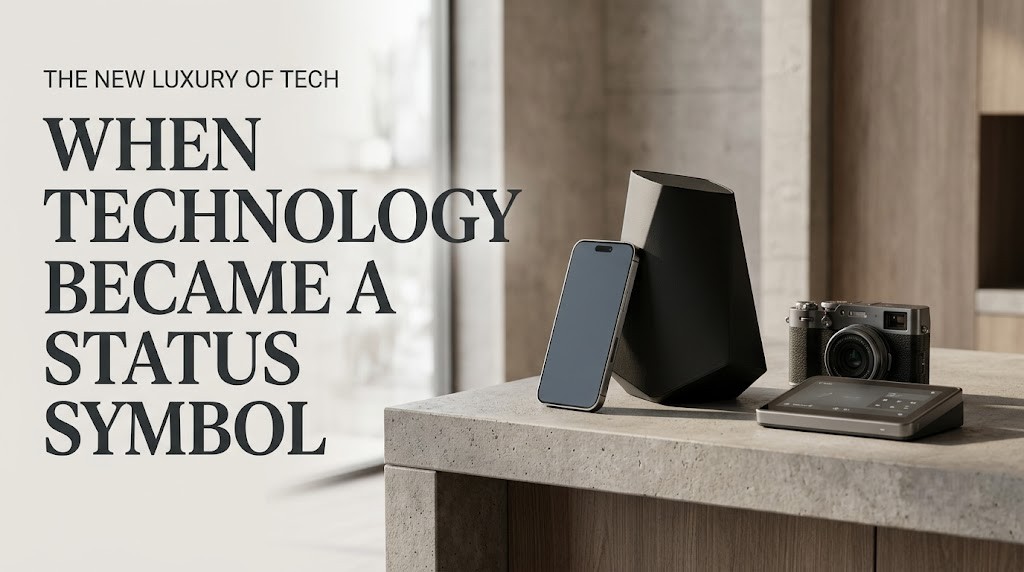
When Technology Became a Status Symbol
When did technology stop being just technology?
At some point, the conversation around gadgets changed. People stopped asking only, “What does this product do?” and started asking, “What does owning this product say about me?”
That shift is one of the most interesting stories in modern consumer culture. Technology was once judged primarily by specifications: processor speed, megapixels, battery life, storage, sound quality or engineering performance. Today, the most powerful technology brands often compete on something far less measurable — identity.
A smartphone can be a communication tool. A camera can capture photographs. A speaker can play music. A vacuum cleaner can clean your home. But the strongest brands have figured out how to make these ordinary functions feel like part of a larger lifestyle.
And that is where technology becomes luxury.
Apple: When a Device Became an Identity
Apple arguably understood this transformation earlier and more effectively than almost anyone else.
Apple did not simply sell computers, smartphones and headphones. It built an ecosystem that made its products feel connected to the way people live, work and communicate. The hardware became recognizable, the software became familiar, and the design language became part of the brand’s identity.
The result is fascinating: consumers often recognize an Apple product before they even see the logo.
An iPhone is no longer simply a smartphone. A MacBook is not merely a laptop. AirPods are not just wireless earbuds. Together, they form a visual and cultural language that communicates a certain preference for design, simplicity and premium technology.
Apple understood something fundamental about modern branding: people do not always buy products because they need them. Sometimes they buy products because they want to become associated with what the brand represents.
Dyson: Making the Ordinary Worth Displaying
Then there is Dyson.
Vacuum cleaners were never traditionally objects people wanted to talk about. They were functional household appliances — useful, necessary and largely invisible.
Dyson changed that perception.
Through distinctive industrial design, visible engineering and premium positioning, Dyson turned household technology into something that could occupy a visible place in the home.
Its products look engineered rather than hidden. The transparent components, sculptural forms and futuristic aesthetic communicate technology even before the product is switched on.
That matters because premium consumers are increasingly buying objects that fit into their environments aesthetically.
A product does not have to disappear into a cupboard anymore. If it looks good enough, it becomes part of the interior.
Dyson did not simply make a better vacuum cleaner. It helped make the vacuum cleaner interesting.
That is a powerful branding lesson: when design becomes part of the product experience, functionality itself can become aspirational.
Leica: When Technology Became Collectible
Leica represents another level of the same phenomenon.
A camera is fundamentally a tool for capturing images. But Leica has managed to position its cameras as objects of craftsmanship, heritage and cultural significance.
The appeal is not limited to technical specifications.
There is history. There is craftsmanship. There is the physical experience of using the camera. There is the association with iconic photography and a long-standing visual culture.
That creates something specifications alone cannot manufacture: emotional value.
A Leica can feel less like another piece of consumer electronics and more like an object you want to keep.
And that distinction is crucial.
The most desirable luxury technology often creates a relationship between the consumer and the object. You do not simply use it. You appreciate it, display it, talk about it and sometimes even collect it.
Leica demonstrates how heritage can transform technology from a disposable purchase into something with permanence.
Bang & Olufsen: Turning Sound into Design
For decades, audio equipment was largely about performance.
How loud is it? How clear is it? How powerful is the bass?
Bang & Olufsen approached the category differently.
The brand made sound part of the visual environment.
Its speakers and audio products are designed to look intentional within a room rather than simply being pieces of equipment placed around it. Materials, proportions and minimalism become part of the experience.
That changes the buying decision.
Consumers are no longer choosing only between “good sound” and “better sound.” They are choosing between objects that communicate different tastes.
The speaker becomes furniture.
The headphones become an accessory.
The technology becomes part of the architecture.
This is where luxury branding becomes particularly powerful. The product does not merely perform a function; it contributes to the atmosphere surrounding the consumer.
Sonos: When the Speaker Became Part of the Home
Sonos took a slightly different route.
Rather than making audio equipment feel like traditional hi-fi hardware, Sonos helped integrate wireless speakers into everyday living spaces.
The product became part of the home rather than something that demanded attention.
A Sonos speaker can sit in a living room, bedroom, kitchen or workspace and become part of the environment. The technology works quietly in the background while still maintaining a recognizable design language.
This is an important evolution in consumer technology.
The best products increasingly do not feel like technology.
They feel like part of life.
That sounds simple, but it represents an enormous branding opportunity. When technology becomes invisible in its operation but recognizable in its aesthetic, it moves closer to lifestyle branding.
The Real Product Is No Longer the Product
This is where the status-symbol conversation gets interesting.
Apple, Dyson, Leica, Bang & Olufsen and Sonos operate in very different categories. They sell very different products to very different consumers.
But they share a common strategy.
They sell meaning.
A consumer buying a premium technology product may be paying for engineering, but they are also paying for design. They may be paying for performance, but they are also paying for confidence. They may be paying for functionality, but they are also buying an association with a particular lifestyle.
That is why two products with similar technical capabilities can have dramatically different perceived value.
One is a gadget.
The other is a brand.
And the difference is rarely created by specifications alone.
Why Status Branding Works
Humans have always used objects to communicate identity.
Clothing, watches, cars, furniture and even architecture can tell people something about the person who owns them.
Technology simply entered the same conversation.
A smartphone sits on the table during a meeting. Headphones are visible on the train. A laptop appears in a coffee shop. A camera hangs around someone’s neck. A speaker becomes part of a living room.
Technology is increasingly public.
That means design matters more than ever.
When a product is visible, consumers are not only evaluating how well it works. They are also evaluating how it makes them feel — and how they think it makes them look.
This is why premium technology brands spend so much effort creating distinctive visual identities.
The product becomes a social signal.
From Features to Feelings
The biggest shift in technology marketing may be the movement from features to feelings.
Traditional technology advertising often focused on what a product could do.
More storage.
Faster processing.
Better resolution.
Longer battery life.
But premium brands increasingly sell a different narrative.
Create beautifully.
Live intelligently.
Listen differently.
Own something timeless.
Make your home feel better.
These messages are less about specifications and more about aspiration.
And aspiration is often what creates pricing power.
A consumer can compare technical specifications.
It is much harder to compare identity.
That is why the strongest technology brands do not compete solely on performance. They compete on perception.
The Luxury Lesson for Technology Brands
The most valuable lesson here is not that every technology company should make expensive products.
It is that technology becomes powerful as a brand when functionality and identity meet.
Apple made personal technology feel cultural.
Dyson made household appliances feel futuristic.
Leica made cameras feel collectible.
Bang & Olufsen made audio part of interior design.
Sonos made connected sound feel natural inside the home.
None of these companies succeeded simply because they had technology.
They succeeded because they gave technology a personality.
And that is the real difference between selling a product and building a brand.
A product answers the question: “What does it do?”
A powerful brand answers a much more valuable question:
“What does owning it say about me?”
That is when technology stops being just technology.
It becomes taste.
It becomes lifestyle.
It becomes identity.
And eventually, it becomes status.
So the next time someone says, “It’s just a gadget,” look a little closer.
Because in the world of premium technology, the gadget may only be the beginning.
Which brand do you think mastered the technology status game best — Apple, Dyson, Leica, Bang & Olufsen or Sonos?

Software Developer & Writer
Hey, I'm Diva, a developer and writer blending code and creativity. I'm driven by a deep curiosity and a relentless pursuit of excellence. Join me as I craft digital solutions and captivating stories.


Leave A Comment