
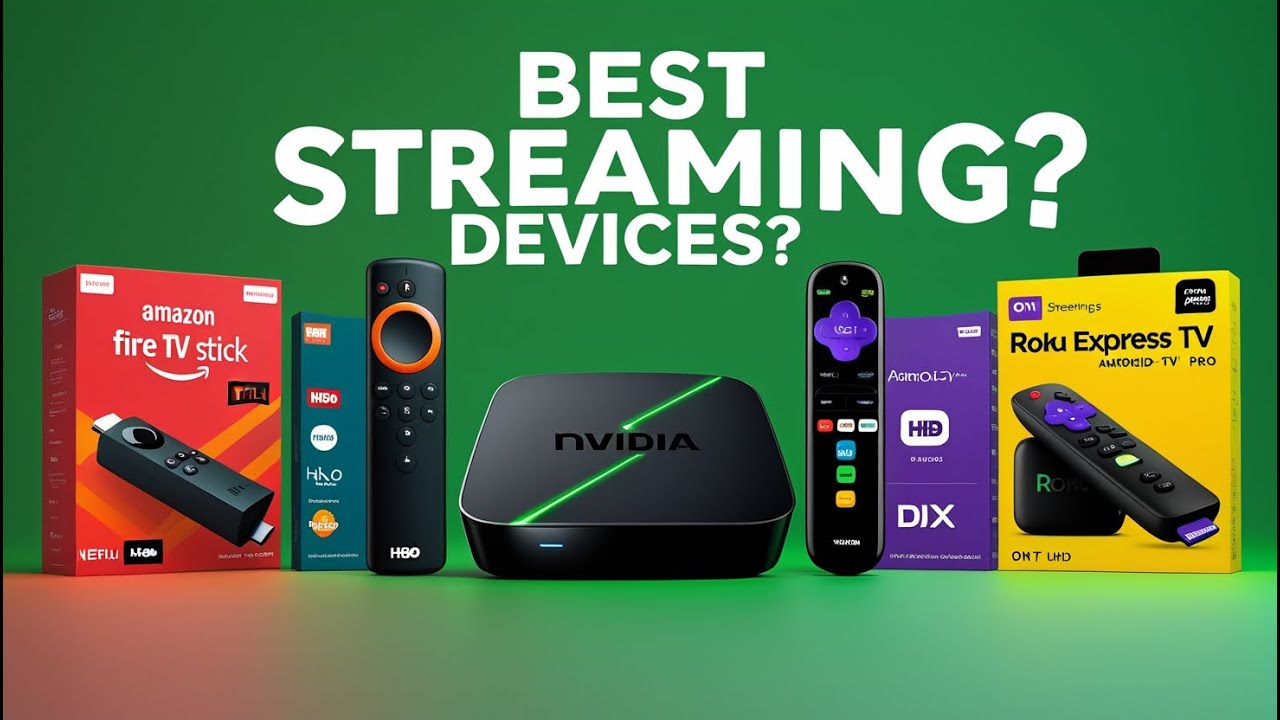
Top 5 Streaming Devices Worth Buying in 2026
Streaming has quietly become the centre of the modern living room. Netflix, Disney+, Prime Video, Apple TV+, YouTube, live sports and free ad-supported platforms have made the traditional cable box feel increasingly outdated. But there is one problem: a great television does not automatically guarantee a great streaming experience.
A dedicated streaming device can make an older TV feel considerably smarter, improve navigation, add 4K HDR support and give you a more consistent interface across services. The choice, however, is no longer simply about buying the cheapest HDMI stick. Ecosystem compatibility, picture formats, processing power, remote design, connectivity and even the amount of advertising in the interface can make a noticeable difference.
For this guide, the focus is on five devices that represent distinctly different types of buyers in 2026 from affordable streaming sticks to premium media players and enthusiast hardware. Prices vary significantly by country and retailer, so the better question is not simply which device is cheapest, but which device makes sense for the way you actually watch TV.
If streaming is something you want to feel effortless rather than merely functional, the Apple TV 4K remains one of the most polished options available. The current third-generation model uses Apple’s A15 Bionic chip and supports 4K video, Dolby Vision, HDR10+, Dolby Atmos and HDMI 2.1. Apple currently sells a 64GB Wi-Fi version and a 128GB Wi-Fi + Ethernet version in India.
The appeal goes beyond picture quality. Navigation feels fast, apps open quickly and the Siri Remote gives the whole experience a more premium character. For someone who already owns an iPhone, AirPods, Apple Watch or other Apple products, the integration becomes even more useful. The Ethernet model also supports Thread networking and can work as a smart-home hub.
Imagine a household where one person watches Netflix, another uses Apple TV+, the kids switch between YouTube and Disney+, and everyone has an iPhone. Instead of treating the television as an isolated device, Apple TV becomes another part of that ecosystem. You can also use your iPhone to help locate the Siri Remote if it disappears between the sofa cushions.
The catch is straightforward: this is not the bargain option. Apple’s Indian pricing currently starts at ₹25,900 for the 64GB Wi-Fi model and reaches ₹31,900 for the 128GB Wi-Fi + Ethernet model.
Best suited to: Apple households, premium home theatres and viewers who value speed, integration and a polished interface.
The Amazon Fire TV Stick 4K Max takes a very different approach. Instead of putting a premium price on the hardware, Amazon focuses on delivering a compact device that plugs directly into the television and brings 4K streaming, HDR formats and Alexa voice control into the setup.
It makes particular sense for households already using Amazon services. If your home already revolves around Prime Video, Alexa speakers or other Amazon devices, Fire TV can fit naturally into the environment.
There is also a practical advantage to the stick design. You do not need another box sitting underneath the television; the device connects through HDMI and can effectively disappear behind the screen. That makes it especially attractive for bedrooms, secondary televisions and smaller entertainment setups.
The current streaming market also illustrates why Fire TV remains relevant: even cheaper Fire TV models support 4K HDR formats, while higher-end options such as the 4K Max provide a faster experience. Current shopping listings can vary widely in price, so checking the model generation and retailer before purchasing is important.
Where Fire TV can divide opinion is the interface. Amazon’s ecosystem is heavily integrated into the home screen, and some reviewers have criticised the amount of promotional content and menu clutter compared with cleaner alternatives.
That does not make it a poor choice; it simply means the experience is designed differently. If you are comfortable with Amazon’s ecosystem and want a compact 4K streamer without spending Apple TV money, it remains a compelling option.
Best suited to: Amazon households, Alexa users, secondary TVs and buyers looking for a compact 4K streaming solution.
Roku has built its reputation around doing one thing particularly well: making streaming uncomplicated.
The Roku Ultra is the company’s more substantial streaming player, rather than a tiny HDMI stick. Its appeal is less about creating a giant technology ecosystem and more about putting your streaming services in one accessible place. Current 2026 buying guides continue to highlight the Roku Ultra for its interface, remote and wired connectivity.
That simplicity can be surprisingly valuable.
Consider a family television used by four different people. One person wants Netflix, another watches sports, someone else uses Disney+, while another frequently searches YouTube. Nobody wants to spend five minutes figuring out where a particular app or setting is located. Roku’s relatively straightforward interface makes the television feel more like an appliance and less like a computer.
The remote is another part of the appeal. Depending on the model and market, Roku’s higher-end remote includes features such as voice control, a headphone jack and remote-finding functionality. The Ultra also offers Ethernet connectivity, which can be useful if your Wi-Fi signal is inconsistent around the television.
There is an important geographic consideration, though. Roku’s hardware availability is stronger in the United States and selected markets than in India and some other regions. That means international buyers should check compatibility, app availability and local retail support before importing one.
Best suited to: Families, people who prefer simple interfaces and viewers who want a dedicated streaming box without committing to one large technology ecosystem.
The Google TV Streamer 4K is interesting because it is more than a streaming box. Google designed it as an entertainment device that also plays a role in the smart home.
It supports 4K HDR, Dolby Vision and Dolby Atmos, while the device includes 4GB of RAM and 32GB of storage. It also has built-in Ethernet, making it a useful choice for people who prefer a wired connection rather than relying entirely on Wi-Fi.
But its biggest differentiator is the smart-home functionality. Google TV Streamer includes a Thread border router and acts as a hub for Matter and Google Home devices. In other words, the same box that streams a movie can become part of the infrastructure controlling compatible lights, sensors and other connected products around your home.
Picture a modern apartment where your television is in the centre of the living room. You could have Google Home-compatible lights, smart plugs and other devices connected around it. Instead of buying another dedicated smart-home hub, the streaming device can serve multiple purposes.
Google also focuses heavily on content discovery. Rather than forcing you to remember which streaming service carries a particular film, the platform brings recommendations and content from multiple services together.
The official US price is listed at $99.99, although international pricing and availability differ.
Best suited to: Android users, Google Home households and people who want their streaming device to double as part of a smart-home setup.
The NVIDIA Shield TV Pro is the unusual entry on this list. It is not the newest-looking streaming device, but it continues to attract enthusiasts because it offers capabilities that ordinary streaming sticks do not prioritise.
Underneath its compact design is NVIDIA’s Tegra X1+ processor with 3GB of RAM. It supports 4K HDR, Dolby Vision, Dolby Atmos and AI-enhanced upscaling that can take compatible lower-resolution content toward 4K. It also includes Gigabit Ethernet and two USB 3.0 ports.
That hardware makes the Shield particularly interesting for people who have a personal media collection or use Plex. It also supports GeForce NOW cloud gaming and Android gaming, giving it a broader role than simply opening Netflix or YouTube.
For example, imagine someone with a 4K OLED television, a surround-sound system, a large Plex library and a gaming controller. A basic streaming stick might cover the streaming apps, but it would not necessarily offer the same flexibility for local media, high-end audio and gaming.
The downside is that it is difficult to justify the Shield Pro if your viewing habits are simple. If you only watch Netflix, Prime Video and YouTube, much of its enthusiast-oriented hardware may go unused.
Best suited to: Plex users, home-theatre enthusiasts, gamers and people with more demanding media setups.
What Should You Look For Before Buying?
The most important specification is not always the number printed on the box. 4K support, for example, is useful only if your television and streaming service provide 4K content. Similarly, Dolby Vision matters most when your TV supports it.
Your internet connection also deserves attention. A premium streaming box cannot compensate for an unreliable network. For a television positioned far from your router, a device with Ethernet can sometimes make more practical sense than buying the fastest Wi-Fi streamer available.
Then there is the ecosystem question. Apple users may appreciate Apple TV’s integration, while Google users may benefit from Google TV’s smart-home features. Amazon users may naturally gravitate toward Fire TV. Someone who simply wants a straightforward interface may prefer Roku.
In other words, the “best” streaming device changes depending on the room, television and household using it.
The Bottom Line
Streaming devices have evolved from simple accessories into miniature entertainment computers. The right one can extend the useful life of an older television, improve navigation and bring modern streaming features to a screen that otherwise feels dated.
The Apple TV 4K is built around premium performance and Apple integration. Fire TV Stick 4K Max focuses on compact, accessible 4K streaming within Amazon’s ecosystem. Roku Ultra keeps the experience simple and streaming-focused. Google TV Streamer 4K adds smart-home functionality to the mix, while NVIDIA Shield TV Pro caters to the enthusiast who wants considerably more than Netflix and YouTube.
The smartest purchase is therefore not necessarily the most expensive one. It is the device that fits the way you actually use your television.
“A great streaming device should disappear into the experience — fast enough that you forget the hardware is there, and smart enough to make choosing what to watch feel effortless.”

Software Developer & Writer
Hey, I'm Diva, a developer and writer blending code and creativity. I'm driven by a deep curiosity and a relentless pursuit of excellence. Join me as I craft digital solutions and captivating stories.


Leave A Comment