
Amazon Alexa vs Google Home vs Apple Home: Which Smart Home Ecosystem Fits Your Lifestyle?
Smart speakers have evolved far beyond devices that simply play music or answer questions. Today, they can control lights, manage thermostats, organize shopping lists, connect with security cameras, run routines, and act as the central interface for an increasingly connected home. But as smart-home technology becomes more sophisticated, choosing the right ecosystem has become less straightforward.
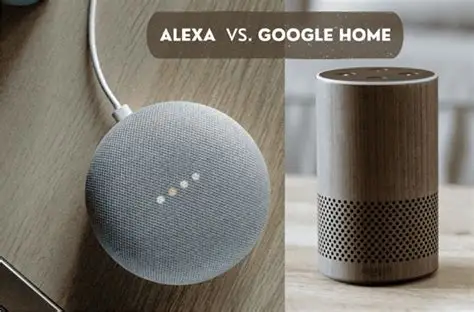
Three names continue to shape the conversation: Amazon Alexa, Google Home, and Apple Home. Each approaches the smart home differently. Alexa emphasizes breadth and device compatibility, Google Home is closely connected to Google’s search, AI, and software ecosystem, while Apple Home focuses heavily on privacy, seamless device integration, and the broader Apple experience.
The right choice depends less on which platform has the longest feature list and more on how you already use technology. Your smartphone, streaming services, household devices, privacy preferences, and expectations around artificial intelligence can all influence which ecosystem makes the most sense.
Amazon Alexa: The Broadest Smart-Home Approach
Amazon Alexa has spent years building a reputation as one of the most widely supported smart-home platforms. Its biggest advantage is the sheer range of compatible products and services. From affordable smart bulbs and plugs to thermostats, cameras, televisions, appliances, and security devices, Alexa can work with a remarkably broad selection of hardware.
That flexibility makes Alexa particularly attractive for people who want to build their smart home gradually. You do not necessarily need to purchase everything from one manufacturer. Instead, you can mix devices from different brands and use Alexa as the layer that brings them together.
Amazon’s Echo range also gives users plenty of hardware options. A small Echo device can provide basic voice control, while displays such as Echo Show models add visual information, video calling, recipes, cameras, and other screen-based experiences. This makes Alexa suitable for everything from a simple bedroom setup to a more elaborate connected home.
Another important part of Alexa’s appeal is its automation capability. Users can create routines that combine several actions into a single command or trigger. Saying good morning, for example, can potentially turn on selected lights, provide information, adjust compatible devices, and start a preferred media experience.
Alexa has also benefited from Amazon’s enormous retail ecosystem. Shopping lists, product discovery, deliveries, subscriptions, and other Amazon services can naturally fit into the experience. For households that already rely heavily on Amazon, that integration can make Alexa feel less like an additional technology layer and more like an extension of existing digital habits.
However, Alexa’s enormous ecosystem can also introduce complexity. With so many compatible products and third-party integrations, the experience can vary depending on which devices are installed. Users who want a tightly controlled environment may find the openness appealing, while others may prefer a more curated platform.
Google Home: A Smarter Conversation With Your Home
Google Home takes a somewhat different approach. Its strength has traditionally been connected to Google’s expertise in search, information, maps, calendars, YouTube, Android, and increasingly sophisticated artificial intelligence.
For people already living inside Google’s ecosystem, this can create a natural experience. A Google Home setup can connect with services and devices that users already interact with every day, making the smart speaker feel like another part of their digital environment rather than an isolated gadget.
Google’s conversational capabilities have historically been another major attraction. Asking a general question, looking for information, checking the weather, or requesting information about a particular topic has generally been one of the platform’s strongest use cases. The evolution of Google’s AI technology is also changing expectations around how users interact with smart-home assistants.
Instead of thinking only in terms of rigid commands, the industry is moving toward more natural conversations. Users increasingly expect assistants to understand context, follow-up questions, and more complicated requests. Google’s AI strategy positions Google Home to play an important role in that transition.
The Google Home app is also central to the experience. It provides a way to organize compatible devices, manage rooms, create automations, and control the home from a smartphone. For Android users, the relationship can feel especially natural because Google services already form a significant part of the mobile experience.
Google Home is not necessarily about owning the largest possible collection of smart-home gadgets. Its appeal is more closely tied to the combination of connected-home controls, Google’s software ecosystem, and AI-driven interaction.
There are still considerations for households that use a wide variety of third-party products. Compatibility has improved considerably across the smart-home industry, particularly as standards such as Matter become more important, but individual device features can still differ between platforms.
Apple Home: The Connected Home for Apple Users
Apple Home approaches the smart home from a distinctly Apple perspective. Instead of trying to become a universal platform for every possible device and service, Apple places strong emphasis on integration across its own hardware and software ecosystem.
For someone who already owns an iPhone, Apple Watch, iPad, Mac, or Apple TV, Apple Home can feel exceptionally cohesive. The Home app provides a central place to control compatible accessories, while Siri offers voice-based interaction.
Apple’s approach also places considerable emphasis on privacy and security. That has become increasingly important as smart-home devices move deeper into people’s personal lives. Cameras, microphones, sensors, locks, and other connected products can generate highly sensitive information, making the way that data is handled an important consideration when selecting an ecosystem.
Apple’s HomeKit architecture and newer Matter support have also helped broaden the range of compatible products available to Apple users. Consumers no longer necessarily have to choose between Apple’s ecosystem and modern cross-platform smart-home standards.
The trade-off is that Apple’s approach can feel more selective than Alexa’s. Consumers who want maximum device variety and extensive third-party experimentation may find Amazon’s ecosystem more flexible. Apple Home is particularly compelling for people who prioritize a consistent experience across their existing Apple devices.
Siri is another important part of that equation. While Apple’s assistant has historically faced strong competition in broader conversational AI, the smart-home experience is not solely about asking general questions. For controlling lights, scenes, accessories, and other compatible devices, Siri can become a convenient interface within the Apple environment.
The Importance of Matter
One of the biggest changes in the smart-home market is happening underneath the brands themselves.
For years, consumers often had to check whether a smart bulb, plug, sensor, or appliance was compatible with Alexa, Google Home, Apple Home, or another platform. The arrival and growing adoption of Matter, an industry-backed smart-home standard, is designed to reduce some of those compatibility barriers.
Matter does not make every smart device identical, and support for individual features can still vary. However, the broader goal is significant: a compatible device can potentially work across multiple major ecosystems instead of forcing consumers into a single brand’s hardware universe.
This changes the buying decision. Instead of asking only, “Which assistant should I buy?” consumers can increasingly ask, “Which ecosystem works best with the way I live?”
That is a more useful question because the smart speaker itself is only one component of the experience.
Alexa vs Google Home vs Apple Home for Everyday Use
For everyday smart-home control, the differences become clearer when you consider how each platform fits into a household.
Alexa is particularly strong for consumers who want flexibility and a huge selection of compatible products. It works well in homes containing devices from many different manufacturers and offers extensive automation possibilities.
Google Home is a natural fit for users who rely heavily on Google services and want a smart-home platform closely connected with Google’s information and AI capabilities. Android users may also find the overall ecosystem familiar.
Apple Home is particularly suited to households already invested in Apple’s hardware. The combination of iPhone-based control, Siri, Apple TV, Apple Watch, privacy-focused features, and Home app integration can create a cohesive experience.
None of these approaches is universally superior because the definition of a “better” smart home depends on the household. A person building a home around inexpensive third-party devices may have very different priorities from someone who already owns multiple Apple products.
What About Smart Displays?
The choice becomes even more interesting when smart displays enter the picture.
Amazon’s Echo Show line places a screen at the center of the Alexa experience, giving users visual access to information, video, recipes, cameras, calls, and smart-home controls. This can be particularly useful in kitchens and shared family spaces.
Google’s smart-home experience can also benefit from compatible displays and connected devices, particularly for households already using YouTube and Google’s broader media ecosystem.
Apple takes a more distributed approach, relying heavily on devices such as iPhones, iPads, Apple Watches, and Apple TV alongside compatible Home accessories rather than positioning one specific HomePod display as the center of the ecosystem.
That difference reflects the philosophy of each company. Amazon often wants the Echo device to become a household control center. Google connects the smart home to its wider software and information ecosystem. Apple emphasizes the relationship between the home and the devices users already carry.
Privacy and the Smart Home
Privacy deserves more attention than it sometimes receives in smart-home buying decisions.
A connected home can contain microphones, cameras, doorbells, locks, motion sensors, presence sensors, and other devices capable of revealing details about daily routines. That means consumers should look beyond the speaker’s design and price.
Apple has made privacy a major part of its product positioning, while Amazon and Google also provide privacy controls and account-management options across their ecosystems. The exact protections vary by product and service, so consumers should review current settings and policies before installing sensitive devices.
The important point is that smart-home convenience comes with responsibility. A cheaper device is not necessarily a better purchase if its privacy controls, security support, or software-update practices are unclear.
The Future of Smart Homes Is Becoming More Intelligent
The next phase of the smart home is likely to be defined less by voice commands and more by context.
Instead of saying a series of individual commands, users increasingly expect their homes to understand routines and respond to situations. Lights, climate controls, entertainment systems, security devices, and sensors can work together to create an environment that requires less manual interaction.
Artificial intelligence will accelerate that transition. Assistants are moving toward more natural conversations, better contextual understanding, and more capable automation. This means the difference between Alexa, Google Home, and Apple Home may increasingly depend on how each company combines AI with the physical devices inside a home.
At the same time, interoperability will remain important. Standards such as Matter could make it easier for consumers to mix ecosystems, reducing the risk of becoming completely locked into one company.
The Bottom Line
Amazon Alexa, Google Home, and Apple Home represent three different philosophies of the connected home.
Alexa is built around breadth, compatibility, hardware variety, and extensive smart-home functionality. Google Home connects the home closely with Google’s software, information services, Android ecosystem, and evolving AI capabilities. Apple Home emphasizes ecosystem integration, privacy, and a seamless experience for people already using Apple hardware.
The decision ultimately comes down to the technology already present in your life. If your home contains a wide mixture of smart devices, Alexa’s broad compatibility can be useful. If Google services and Android are central to your everyday routine, Google Home offers a natural extension of that ecosystem. If your household is already built around Apple products and privacy-focused integration matters to you, Apple Home provides a closely connected experience.
The smart-home market is also becoming less dependent on choosing a single ecosystem. With Matter and other interoperability efforts gaining importance, consumers have more flexibility than they did several years ago.
The smartest purchase, therefore, may not be the speaker with the longest feature list. It is the ecosystem that fits naturally into the way your household already communicates, consumes media, manages devices, and uses technology every day.

Software Developer & Writer
Hey, I'm Diva, a developer and writer blending code and creativity. I'm driven by a deep curiosity and a relentless pursuit of excellence. Join me as I craft digital solutions and captivating stories.




Leave A Comment