
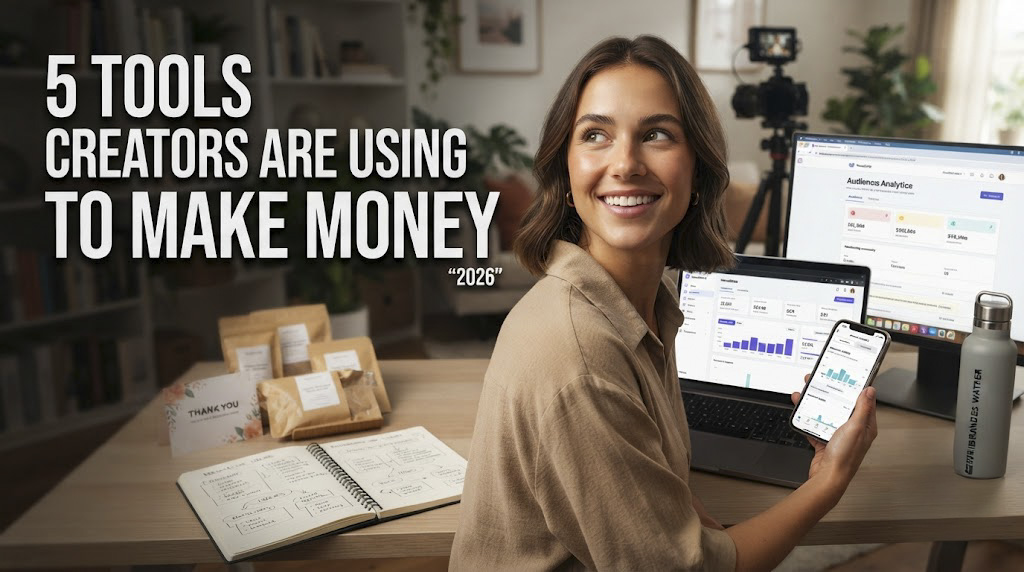
5 Tools That Are Changing How Creators Monetise Their Content
The creator economy has moved far beyond the traditional idea of earning money through advertising or waiting for a brand collaboration to arrive. Today, a strong audience can become a genuine business asset, and creators have more ways than ever to turn attention, trust and expertise into recurring revenue. Whether someone is building a niche newsletter, running an educational Instagram page, producing videos, hosting a podcast or developing a personal brand, the right monetisation platform can create income streams that do not depend entirely on algorithms or one-off sponsorships.
What makes modern creator monetisation particularly interesting is the variety of business models now available. Some platforms focus on subscriptions, while others help creators sell digital products, memberships, courses or exclusive experiences. The important shift is that creators can now build a direct relationship with their audience and give followers a reason to pay for something more valuable than the free content appearing on their feeds.
Patreon: Turning Audience Loyalty into Recurring Revenue
Patreon has become one of the most recognisable platforms for creators who want to build a membership-based business around their existing audience. Instead of relying exclusively on advertising, affiliate income or sponsored posts, creators can offer supporters a paid membership in exchange for exclusive content, early access, private communities, behind-the-scenes material and other benefits. The model is particularly useful for creators whose audiences are highly engaged and want a closer connection with their work.
The biggest advantage of a membership model is predictability. A creator who earns from individual sponsorships may experience significant differences in monthly revenue depending on campaign availability, audience performance and brand budgets. Memberships introduce a recurring component because supporters pay regularly for continued access to the creator’s offerings. This can be especially valuable for podcasters, writers, artists, educators, video creators and niche communities where followers are invested in the creator rather than simply consuming individual pieces of content.
Patreon can also encourage creators to think differently about their content strategy. Instead of putting everything behind a paywall, a creator can use free social media content to attract new followers and reserve deeper resources, exclusive conversations or premium experiences for paying members. In this structure, Instagram, TikTok, YouTube, podcasts or newsletters can function as discovery channels, while the membership platform becomes the destination for the most loyal audience members.
Substack: Monetising Expertise Through Paid Content
The rise of newsletters has created another powerful route for content monetisation. Substack allows writers, journalists, analysts, commentators and subject-matter experts to publish directly to subscribers, with the option of offering paid subscriptions. The platform is particularly relevant for creators whose strongest asset is not necessarily visual entertainment but knowledge, analysis, storytelling or specialised expertise.
A newsletter can become a valuable monetisation channel because it gives creators a direct line to their audience. Social platforms can change their algorithms, reduce organic reach or alter monetisation programmes, whereas an email-based relationship provides a different kind of connection. For creators producing thoughtful analysis, industry commentary, financial education, cultural criticism, technology insights or specialist research, the newsletter format can create a more focused environment than a fast-moving social feed.
The paid newsletter model also demonstrates an important principle of creator economics: people are often willing to pay for clarity rather than simply information. The internet already contains enormous amounts of free information, but audiences may pay for curated insights, specialised knowledge, original research, practical frameworks or a distinctive editorial perspective. A creator who consistently helps readers understand a complicated subject can potentially transform expertise into a subscription business.
This approach works particularly well when free content acts as the introduction to a creator’s perspective. Public posts can demonstrate knowledge and attract new readers, while premium editions provide deeper analysis, exclusive reports, additional resources or specialised commentary. Over time, the newsletter itself can become an independent media property rather than simply another social media channel.
Gumroad: Selling Digital Products Without Building a Full Store
For creators who want to move beyond subscriptions, digital products provide another monetisation opportunity. Gumroad is designed around selling digital goods directly to an audience, making it useful for creators who want to package their knowledge or creative work into products that customers can purchase.
The possibilities are broad. A designer might sell templates, a marketer could create social media resources, a photographer could offer presets, a writer could publish guides, or an educator could package learning materials. The underlying idea is simple: instead of monetising every individual piece of content, the creator develops a product once and sells it repeatedly.
This changes the economics of content creation because the product becomes an extension of the creator’s expertise. A free Instagram carousel about productivity, for example, may attract attention, but a detailed productivity system, template collection or downloadable planning resource can become a paid product. Similarly, a creator discussing digital marketing could use free educational content to build credibility and then offer a comprehensive resource for followers who want something more structured.
The strongest digital products usually solve a specific problem rather than attempting to appeal to everyone. Audiences are more likely to understand the value of a product when its purpose is immediately clear. A narrowly focused template, guide or toolkit can therefore become more commercially useful than a large product with an unclear benefit.
Gumroad’s model also highlights why creators should think about their content as part of a broader customer journey. A social post attracts attention, a useful free resource builds trust, and a paid digital product provides a deeper solution. When these elements work together, monetisation becomes a natural extension of content rather than an interruption to it.
Kajabi: Building Courses, Communities and Knowledge Businesses
For creators whose expertise can be transformed into structured education, Kajabi offers a more comprehensive approach. Rather than focusing on one type of digital product, Kajabi is designed to help creators build online businesses around courses, memberships, coaching, digital products, marketing and audience relationships.
This model is particularly relevant to experts who have developed specialised knowledge through professional experience. A fitness educator, business consultant, marketing specialist, career coach or language teacher can potentially turn their expertise into a structured educational experience. Instead of repeatedly answering the same questions through individual social media posts, they can develop a complete learning journey that customers purchase.
The difference between ordinary content and a knowledge product is depth. A short social media video might explain one concept in sixty seconds, while a course can take the learner from an introductory problem through a series of lessons, exercises and practical applications. This makes educational content particularly suitable for premium monetisation when the creator has a well-defined audience and demonstrable expertise.
Kajabi also reflects the growing movement toward creator-led businesses rather than creator-led channels. The creator is no longer simply publishing content and hoping to earn from views. Instead, content can become the top layer of a business ecosystem that includes free educational material, email communication, paid courses, memberships and other premium experiences.
For audiences, the attraction is often convenience and structure. People may be able to find hundreds of individual videos about a particular subject online, but a well-organised course can save them the time and effort required to determine what to learn, in what order and how to apply it. That structure itself becomes part of the value proposition.
Ko-fi: Combining Support, Memberships and Digital Sales
Ko-fi takes a more flexible approach to creator monetisation by combining several income models in one platform. Creators can receive direct support from their audience, offer memberships and sell digital products or commissions. This makes the platform particularly interesting for independent artists, illustrators, writers, developers, musicians and smaller creators who may not want to build an elaborate business infrastructure.
One of the most appealing aspects of this model is its simplicity. Not every creator has a large enough audience to justify a sophisticated subscription strategy, and not every follower wants to commit to a recurring payment. A supporter might simply want to contribute once after enjoying a creator’s work. Others may prefer a membership or purchase a digital product. Giving audiences several ways to support a creator can therefore reduce the pressure to depend on a single revenue stream.
This flexibility is increasingly relevant as the creator economy matures. Different followers have different levels of engagement and purchasing intent. Someone discovering a creator for the first time may only watch free content, while a highly engaged follower might buy a digital product or join a membership. A flexible monetisation platform can accommodate those different stages without requiring the creator to operate several completely separate systems.
For smaller creators in particular, direct audience support can be meaningful because it allows monetisation to begin before reaching the enormous follower counts often associated with major influencer campaigns. A niche audience that genuinely values someone’s work can sometimes be more commercially relevant than a much larger but less engaged following.
The Bigger Shift: From Followers to Revenue Relationships
These five platforms represent different approaches, but they point toward the same broader transformation in the creator economy. The most sustainable monetisation strategies are increasingly built around relationships rather than raw follower counts. A large audience can create visibility, but visibility alone does not automatically translate into revenue. The commercial opportunity emerges when creators understand what their audience values and create a meaningful reason to pay.
That might mean paying for exclusive access through Patreon, subscribing to specialist analysis through Substack, purchasing a digital resource through Gumroad, joining a structured learning experience through Kajabi or directly supporting a creator through Ko-fi. Each model converts audience attention into a different form of economic value.
This also means that creators do not necessarily have to choose one monetisation method forever. A creator could use Instagram or TikTok to generate awareness, YouTube to provide longer educational content, a newsletter to maintain a direct audience relationship, a membership platform for recurring revenue and digital products for one-time purchases. The most sophisticated creator businesses increasingly operate across several layers, with each channel performing a different role.
The important consideration is alignment. A platform should match the type of content being produced, the behaviour of the audience and the value the creator can consistently provide. A photographer may find digital products and memberships natural, while an industry analyst may build around a paid newsletter. An educator might focus on courses, whereas an independent artist could combine commissions, memberships and direct support.
Ultimately, creator monetisation is becoming less about asking, “How can I make money from my followers?” and more about asking, “What valuable experience, knowledge, product or access can I create for the people who already care about my work?” That distinction is significant. It moves content creation away from chasing views alone and toward building a genuine media, education, community or commerce business around an audience.
The next generation of creator businesses will likely be defined not simply by how many people follow an account, but by how effectively creators convert attention into trust, trust into value and value into sustainable revenue. For anyone building a content brand today, these tools offer different paths to make that transition—from publishing content for an audience to creating an ecosystem that audiences are willing to support.

Software Developer & Writer
Hey, I'm Diva, a developer and writer blending code and creativity. I'm driven by a deep curiosity and a relentless pursuit of excellence. Join me as I craft digital solutions and captivating stories.
Leave A Comment