
5 Tech Ideas Changing the Way We Shop
Shopping has never been just about buying something. It is about discovery, comparison, convenience, trust and, increasingly, experience. Over the last decade, technology has quietly changed almost every part of that journey. A customer can discover a product on social media, ask an AI assistant whether it is worth buying, see how it might look in their home through augmented reality, pay without taking out a wallet and receive the order within days or sometimes hours.
What makes the latest wave of retail technology different is that it is becoming less visible. Instead of feeling like separate digital tools attached to shopping, technologies such as artificial intelligence, computer vision, augmented reality and smart payments are becoming part of the shopping experience itself. Retailers are using them to understand customer intent, while shoppers are benefiting from faster decisions and more personalized experiences.
Here are five technology ideas that are changing the way people discover, evaluate and purchase products.
For years, online shopping relied heavily on search bars. Customers had to know what they wanted, type in the right keywords and then work through pages of products. Artificial intelligence is changing that relationship by allowing shoppers to interact with stores in a much more natural way.
Instead of searching for “black running shoes under $100,” a shopper can describe the actual need: “I need comfortable running shoes for daily five-kilometre runs, preferably lightweight and suitable for rainy weather.” An AI-powered shopping assistant can interpret the request, identify relevant products and help narrow the choices. The experience starts to resemble a conversation with a knowledgeable sales associate rather than a traditional product search.
This shift is particularly important because consumers are often overwhelmed by choice. Large marketplaces can offer thousands of similar products, making comparison exhausting rather than convenient. AI can help organize that information by highlighting differences in features, prices, reviews and use cases.
The technology can also make recommendations more contextual. Someone buying a laptop may care about battery life and portability, while another shopper may prioritize gaming performance. Instead of presenting the same product ranking to everyone, AI-powered systems can potentially adapt recommendations around the customer’s stated priorities.
For retailers, the opportunity extends beyond recommendation engines. AI can influence product discovery, customer service, merchandising and post-purchase support. The result could be a shopping journey in which the customer spends less time searching and more time making an informed decision.
One of the biggest limitations of online shopping has always been uncertainty. A product may look attractive in a photograph, but shoppers still wonder how it will look, fit or work in real life. Virtual try-on technology is attempting to close that gap.
Using artificial intelligence, computer vision and augmented reality, retailers can allow customers to visualize products before making a purchase. In fashion, this can mean seeing how glasses, makeup, accessories or clothing might look on the shopper. In beauty, virtual tools can simulate different shades of lipstick, foundation or hair color. The same concept is expanding into categories such as furniture, where shoppers can visualize how a sofa or table might fit into their room.
The appeal is obvious: the screen becomes more interactive. Rather than simply looking at a static product image, the customer can experiment with it.
This technology could also have an important effect on the economics of e-commerce. When customers have more confidence before purchasing, retailers may see fewer returns caused by unrealistic expectations or poor product fit. That matters because returns are expensive for retailers and inconvenient for customers.
However, virtual try-on is not a replacement for physical experience. Lighting, camera quality, body shape, materials and real-world dimensions can all affect accuracy. The technology works best when it is presented as a decision-support tool rather than a perfect simulation.
The bigger trend is that online shopping is moving beyond “look at the product” toward “experience the product before you buy it.”
The traditional shopping journey often started with a retailer. Consumers would visit a website, browse categories and eventually select a product. Social commerce is reversing that sequence. Increasingly, discovery can happen first, with the purchase following naturally from the content.
A customer might see a creator demonstrating a skincare product, watch a short video showing how a kitchen gadget works or discover a new sneaker through a fashion post. If the product is integrated into the platform, the distance between discovery and purchase can be extremely short.
This matters because modern consumers do not always separate entertainment from shopping. A product can appear in a video, livestream or creator recommendation without feeling like a conventional advertisement. The content itself becomes part of the product discovery process.
Short-form video is particularly influential because it can demonstrate products in situations that conventional product photography cannot easily communicate. A 15-second video can show how a suitcase rolls, how a jacket fits or how a beauty product is applied.
Brands are responding by investing more heavily in creator-led content and shoppable media. Instead of simply displaying an advertisement, they are trying to demonstrate why the product belongs in a consumer’s lifestyle.
The technology behind social commerce is also becoming more sophisticated. Product tagging, recommendation systems, integrated checkout, personalized feeds and automated content tools are creating a more connected path from attention to transaction.
The important change is not simply that social platforms can sell products. It is that shopping can now happen inside an environment where people were originally going to discover ideas, entertainment and communities.
The rise of e-commerce led many people to assume that physical stores would become less important. Instead, technology is helping retailers rethink what a physical store can actually do.
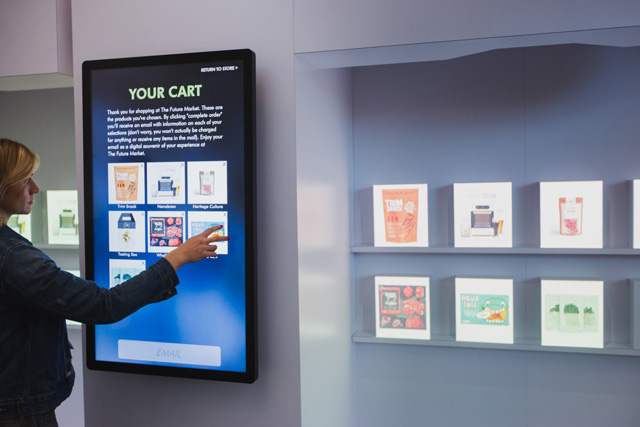
Smart retail environments combine technologies such as computer vision, sensors, digital displays, mobile apps and connected payment systems to create more seamless experiences. A customer might use a smartphone to locate products, receive personalized information, scan an item for details or complete a transaction without following a conventional checkout process.
The idea is to remove unnecessary friction. Waiting in long queues, searching for product information or trying to find a particular size are all areas where technology can potentially improve the experience.
Physical stores also offer something websites cannot fully reproduce: immediate interaction with products. Customers can touch materials, compare sizes, test devices and speak with staff. Technology can enhance that experience instead of replacing it.
For retailers, smart stores can also generate valuable operational insights. Data from inventory systems, store traffic and customer interactions can help businesses understand which products attract attention and where stock needs to be replenished. The challenge is balancing this data-driven approach with privacy and transparency.
The future store may therefore look less like a warehouse filled with products and more like a physical extension of a retailer’s digital ecosystem.
Generative AI is becoming one of the most interesting technologies in modern commerce because it can influence both the customer experience and the retailer’s internal operations.
For shoppers, generative AI can help summarize product information, compare alternatives and answer questions in conversational language. Instead of reading ten separate product descriptions, a customer could ask for a straightforward comparison between two models and receive an explanation tailored to their priorities.
For retailers, the applications are even broader. Generative AI can assist with product descriptions, advertising concepts, email campaigns, merchandising copy and localized content. It can also help businesses experiment with different creative approaches without requiring every variation to be produced manually.
The technology is particularly valuable in large product catalogs. A retailer selling thousands of products needs descriptions, specifications and marketing assets across multiple channels. AI can accelerate that work while allowing human teams to focus more heavily on strategy, brand identity and quality control.
But speed is not the same as accuracy. AI-generated shopping information can contain errors, misunderstand product specifications or produce recommendations that sound convincing without being genuinely useful. Retailers therefore need strong human oversight, particularly when AI is being used to influence purchasing decisions.
The most interesting future is unlikely to be “AI replaces retail.” It is more likely to be AI operating behind the scenes while making the shopping experience feel more responsive, conversational and personalized.
The Bigger Shift: Shopping Is Becoming More Intelligent
These five technologies may look different, but they are moving retail in the same direction. Shopping is becoming increasingly contextual.
Consumers no longer have to begin with a product name. They can begin with a problem, preference, lifestyle or visual idea. AI can interpret the request, social platforms can introduce the product, virtual technology can help visualize it, and connected retail systems can make the final purchase easier.
That changes the role of the retailer as well. The strongest digital shopping experiences are not necessarily the ones with the most technology. They are the ones where technology solves a genuine customer problem without creating additional complexity.
Trust will become increasingly important as these systems become more sophisticated. Customers will want recommendations that are useful rather than purely designed to maximize sales. They will also expect transparency around personal data, AI-generated information and personalized experiences.
Ultimately, the future of shopping may not feel dramatically futuristic. There may be no single moment when consumers realize that retail has changed. Instead, technology will gradually disappear into the background while shopping becomes faster, more conversational, more visual and more personalized.
The store of the future is therefore not simply a website, an app or a physical location. It is an interconnected experience that follows the consumer from discovery to decision and, eventually, to purchase. And as these technologies continue to mature, the biggest transformation may be the simplest one: shopping will increasingly adapt to people, rather than asking people to adapt to the way stores work.

Software Developer & Writer
Hey, I'm Diva, a developer and writer blending code and creativity. I'm driven by a deep curiosity and a relentless pursuit of excellence. Join me as I craft digital solutions and captivating stories.




Leave A Comment