
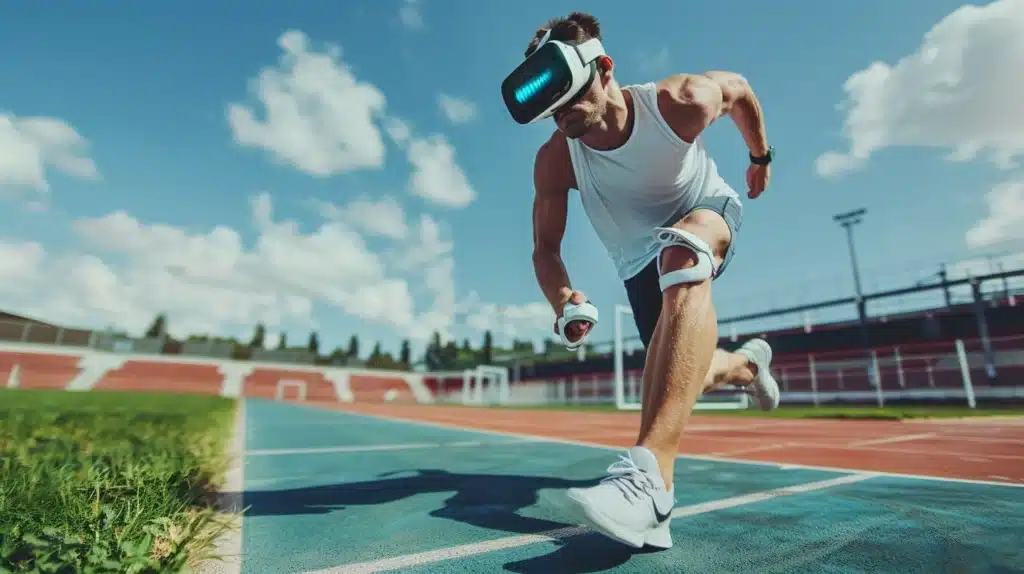
5 Sports Technologies That Are Changing Athletic Performance
For decades, athletic performance was largely measured through familiar metrics: speed, strength, endurance, reaction time and the number of hours an athlete could spend training. Today, those fundamentals still matter, but the way athletes understand and improve them has changed dramatically. Technology has moved from the sidelines into the heart of modern sports, giving athletes, coaches and performance teams access to data that was once impossible to capture. From wearable sensors that monitor movement to artificial intelligence capable of identifying patterns hidden inside thousands of performance records, the modern athlete is increasingly supported by a sophisticated digital ecosystem.
This transformation is creating a new era of data-driven athletic performance. Training is becoming more personalised, recovery is being treated as seriously as competition, and even tiny changes in movement can be analysed to improve efficiency. Sports technology is no longer limited to professional teams with enormous budgets either. Wearable fitness devices, smart training platforms, connected equipment and AI-powered applications are gradually making advanced performance insights accessible to athletes at different levels. The result is a sporting environment where technology does not simply measure what an athlete has done; it increasingly helps determine what they should do next.
One of the most influential developments in modern sports performance is the rapid evolution of wearable technology. Smartwatches, GPS trackers, heart-rate monitors, motion sensors and specialised athletic wear can collect enormous amounts of information while an athlete trains or competes. Instead of relying entirely on how a session feels, athletes can now examine measurable indicators such as heart rate, acceleration, distance covered, speed, workload, sleep quality and recovery patterns.
For endurance athletes, GPS-based performance tracking can reveal how quickly they are moving, how consistently they maintain their pace and where performance begins to decline. In team sports, wearable tracking systems can monitor sprint frequency, high-intensity movements, acceleration and deceleration, helping coaches understand how much physical demand an athlete is experiencing. This data becomes especially valuable when it is collected over weeks or months because individual patterns begin to emerge. A single training session can tell a story, but a large performance dataset can reveal the bigger picture.
The technology is also changing how training loads are managed. One of the biggest challenges for competitive athletes is finding the right balance between pushing the body and allowing it enough time to recover. Training too little can limit development, while excessive workload can increase fatigue and potentially contribute to performance decline or injury. Wearable performance technology gives coaches another layer of information when making these decisions. Instead of applying the same training programme to every athlete, teams can increasingly adjust workloads according to individual responses.
The most important shift, however, is not simply the amount of data being collected. It is the movement toward more intelligent interpretation. As wearable devices become more sophisticated, the goal is moving from “How much did you train?” toward “How did your body respond to that training?” That distinction could become one of the defining features of the next generation of sports performance technology.
Artificial intelligence is rapidly becoming one of the most powerful technologies in professional sports because of its ability to process information at a scale that humans cannot easily match. Every training session, match, race and competition can generate thousands of individual data points. AI-powered sports analytics platforms can examine these datasets, identify patterns and help coaches turn raw information into practical performance insights.
In football, basketball, baseball, tennis and other data-rich sports, artificial intelligence can analyse player movements, tactical decisions, positioning and performance trends. Instead of simply reviewing a match after it has finished, teams can use technology to understand why certain situations occurred and what factors may have contributed to them. An AI system might identify recurring movement patterns, changes in workload or weaknesses that are difficult to recognise through conventional observation alone.
AI is also becoming increasingly relevant to personalised training. Every athlete responds differently to exercise. A training programme that produces excellent results for one person may not deliver the same outcome for another. Machine-learning models can analyse historical performance, recovery information, training intensity and other variables to help create more individualised strategies. This does not mean that algorithms are replacing coaches. Rather, technology is providing coaches with another analytical layer that can support better decision-making.
The long-term potential is even larger. As sports organisations accumulate more historical data, AI systems may become better at predicting performance trends and identifying early warning signals. Coaches could eventually use intelligent platforms to understand when an athlete is approaching peak performance, when recovery needs to be increased or when a change in training strategy might be beneficial. The real competitive advantage may therefore come not from having the most data, but from being able to interpret it faster and more intelligently than competitors.
Some of the most important details in athletic performance happen in fractions of a second. A runner’s stride, a tennis player’s racket position, a golfer’s swing or a basketball player’s jump can involve hundreds of small movements that are difficult to analyse accurately with the human eye alone. Computer vision technology is changing this by allowing cameras and software to break athletic movement into measurable components.
Modern motion-analysis systems can track body positioning, joint angles, movement trajectories and technique. In sports such as golf and tennis, this can provide valuable information about swing mechanics and body rotation. In running, movement analysis can help examine stride patterns, posture and biomechanical efficiency. Coaches can use these insights to identify technical improvements that might otherwise take months of observation to discover.
The technology is particularly interesting because it is becoming less dependent on specialised laboratory environments. Advances in cameras, smartphones and AI-based image processing are making movement analysis increasingly portable. Athletes can potentially record themselves performing a movement and receive detailed feedback without needing an extensive motion-capture facility.
This development is helping popularise the concept of biomechanical performance optimisation. Instead of asking only whether an athlete is fast or strong, sports scientists can investigate how efficiently that athlete moves. Two athletes may produce similar results while using completely different movement patterns, and one technique may place greater physical stress on the body than another. Understanding these differences can help athletes refine technique, improve efficiency and potentially reduce unnecessary physical strain.
As computer vision becomes more sophisticated, the boundary between traditional coaching and digital analysis will continue to disappear. Video is no longer simply something coaches watch after a competition. Increasingly, it is becoming a source of measurable performance intelligence.
Technology is also transforming the equipment athletes use every day. Smart equipment can now collect information about how an athlete interacts with a product, allowing training tools themselves to become part of the performance-analysis system. Connected bikes, intelligent gym equipment, sensor-enabled footwear, smart basketballs and other technology-enhanced products are creating new possibilities for personalised training.
Consider the evolution of sports footwear. Modern performance shoes are increasingly designed around advanced materials, biomechanics and data-informed engineering. Some connected footwear concepts can go further by analysing movement, pressure distribution or running patterns. The objective is not simply to create a comfortable shoe, but to understand how the athlete moves and how equipment can support that movement.
Smart gym equipment is following a similar path. Digital strength-training platforms can monitor repetitions, resistance, movement speed and training volume. This can make strength programmes more measurable and help athletes understand whether they are progressing over time. For elite athletes, these insights can become part of a broader performance-management system.
The wider significance of smart sports equipment is that it brings measurement closer to the athlete. Instead of requiring separate devices for every metric, future products are likely to integrate sensors directly into the equipment athletes already use. This could make data collection more seamless and reduce the disruption that sometimes comes with wearing multiple monitoring devices.
At the same time, smart equipment raises an important question: how much technology is actually useful? More data does not automatically mean better performance. The most valuable products will be those that collect meaningful information without distracting athletes from training. In other words, the future of sports equipment may be less about adding technology everywhere and more about integrating the right technology in the right places.
For years, athletic culture often celebrated the idea that more training automatically meant better performance. Modern sports science is challenging that assumption. Recovery is now recognised as a critical part of the performance cycle, and technology is helping athletes understand what happens between training sessions.
Sleep tracking, heart-rate monitoring, recovery scores, compression technology, cold therapy systems and other recovery-focused solutions are becoming increasingly common across professional and high-performance sports. These technologies are designed around a simple principle: the body needs time and resources to adapt to training.
Sleep technology is particularly important because poor-quality sleep can influence energy, concentration, reaction time and overall recovery. Wearable devices can provide athletes with information about sleep duration and patterns, helping them identify habits that may be affecting performance. While such devices should not replace professional medical assessment, they can offer useful trends that athletes and coaches can consider alongside other information.
Recovery technology is also becoming more personalised. Rather than treating recovery as a fixed routine, athletes can increasingly adapt their approach according to training intensity and individual needs. After a particularly demanding competition, for example, an athlete may require a different recovery strategy than after a lighter training session.
This shift represents a broader change in sports culture. Winning is no longer viewed simply as the result of what an athlete does during competition. It is increasingly connected to everything that happens before and after it: preparation, nutrition, sleep, workload management, mental readiness and recovery. Technology is helping connect these pieces into a more complete picture of athletic performance.
The Future of Athletic Performance Will Be More Connected, Personalised and Predictive
The most interesting aspect of sports technology is not any single device or platform. It is the way these technologies are beginning to work together. Wearable sensors can collect physiological data, computer vision can analyse movement, AI can identify patterns, smart equipment can measure training performance and recovery technology can provide information about how the body responds afterwards. Combined, these systems create a much more detailed picture of the athlete.
This could lead to a future where training programmes are continuously adjusted based on real-time performance data. Instead of following a fixed plan for several months, athletes may use adaptive systems that recommend changes according to workload, recovery and progress. Coaches will still play a central role, but their decisions may increasingly be supported by predictive analytics and personalised performance models.
There is also a wider democratisation of sports technology taking place. Tools that were once associated primarily with Olympic programmes and professional franchises are gradually appearing in consumer products. As sensors become cheaper, AI becomes more accessible and smartphone-based analysis improves, sophisticated performance tracking could become part of everyday training for amateur athletes, runners, cyclists and fitness enthusiasts.
Yet technology should remain a tool rather than becoming the objective. Athletic performance is still shaped by discipline, coaching, resilience, nutrition, psychology and countless human factors that cannot always be reduced to a number on a screen. The best sports technology does not attempt to replace those elements. It enhances them.
The next era of athletics will therefore not simply belong to the strongest or fastest athletes. It may increasingly belong to those who can understand themselves most effectively. From real-time wearable analytics to AI-powered sports performance analysis and intelligent recovery systems, technology is creating an environment where every movement, workload and recovery cycle can provide valuable insight. The athlete of the future will not just train harder; they will train smarter, recover more intelligently and make decisions based on a deeper understanding of how their body performs.
In that sense, the biggest change in sports technology is not the arrival of another gadget. It is the transformation of athletic performance from something that was once primarily observed into something that can now be continuously measured, analysed and optimised. And as technology becomes more intelligent, connected and personalised, the line between human potential and digital performance support is likely to become increasingly fascinating.

Software Developer & Writer
Hey, I'm Diva, a developer and writer blending code and creativity. I'm driven by a deep curiosity and a relentless pursuit of excellence. Join me as I craft digital solutions and captivating stories.




Leave A Comment