
5 Global Brands Making Small Spaces Feel Architectural
Small spaces have spent years being treated as a problem to solve. The conventional approach is familiar: choose lighter colours, buy smaller furniture, add mirrors, remove clutter and hope the room somehow feels larger. But a new generation of global design brands is approaching compact living from a more sophisticated angle.
Instead of trying to disguise the limitations of a small footprint, they are designing around them. Walls become storage. Furniture becomes architecture. Lighting defines zones. A single object can establish the character of an entire room. The result is not simply a space that feels bigger, but one that feels considered.
This shift reflects a broader change in the way people think about interiors. Urban homes are becoming more compact, yet expectations around design have not become smaller. People still want beauty, personality, functionality and a sense of luxury—even when their living room, bedroom or studio occupies only a modest number of square metres.
Across Europe, Asia and the wider international design market, several brands have understood this tension particularly well. Their work demonstrates that architectural impact does not necessarily depend on square footage. Sometimes, it comes down to proportion, material, geometry and the discipline to make every element earn its place.
Here are five global brands showing how small spaces can become remarkably architectural.
Few brands have influenced compact living as extensively as IKEA. Its global appeal has never been based solely on affordable furniture. A significant part of its design language revolves around modularity, adaptability and the idea that one product can serve several purposes depending on how it is arranged.
In a small apartment, this becomes particularly powerful. A shelving system is no longer just somewhere to store books. It can divide a room without creating a permanent wall. A wardrobe can establish a visual boundary between sleeping and working areas. A kitchen unit can run almost seamlessly along an entire wall, turning what might otherwise feel like wasted space into a continuous architectural surface.
That is where IKEA’s influence on small-space design becomes interesting. The brand has helped normalise the idea that storage does not have to disappear into the background. It can become part of the structure of a room.
The best compact interiors often have a strong visual rhythm: repeated vertical lines, consistent finishes and carefully controlled proportions. Modular furniture naturally lends itself to this approach. When several units align, the eye begins to read them as one composition rather than a collection of individual objects.
There is also an important psychological benefit. Small rooms can quickly become visually noisy when every object appears unrelated to the next. IKEA’s coordinated systems offer a way to create continuity, allowing the room to feel intentional rather than crowded.
The architectural quality does not come from expensive materials or dramatic construction. It comes from repetition, alignment and restraint.
Muji takes the opposite route. Where some brands make a statement through form, Muji creates atmosphere by reducing visual noise.
Its interiors are characterised by natural materials, restrained colours, simple geometry and objects that appear almost quietly integrated into their surroundings. This philosophy is particularly effective in small homes because every unnecessary visual interruption can make a compact room feel even tighter.
Muji’s approach suggests that minimalism is not simply about owning fewer things. It is about creating relationships between the things that remain.
A wooden shelf, a low table, a fabric curtain and a simple storage box can occupy relatively little physical space, yet together they establish a complete visual language. Nothing needs to dominate. Instead, the room gains its identity from proportion and consistency.
This is where the brand’s Japanese design influence becomes especially relevant to compact living. Rather than filling every available corner, the design often allows areas of visual calm to remain. Negative space becomes an active part of the composition.
In architectural terms, that restraint matters.
A small room does not necessarily need more decoration. It may need fewer competing signals. When furniture sits close to the floor, storage follows a consistent material palette and objects are deliberately selected, the boundaries of the room become easier to read.
The result can feel surprisingly sophisticated. There is a sense that the architecture has been allowed to breathe.
Muji demonstrates that a compact interior does not need to look busy in order to feel complete. Sometimes the strongest design decision is knowing what not to add.
USM occupies a fascinating position between furniture and architecture. Its modular storage systems are instantly recognisable for their geometric construction, but their real strength lies in their ability to adapt to the structure and requirements of a room.
In a small home, this flexibility can transform the role of storage completely.
Instead of pushing a conventional cabinet against a wall and treating it as an isolated piece of furniture, modular systems can be designed as full-height compositions. They can stretch horizontally, rise vertically or create partial partitions between different functions.
That distinction is significant.
A compact apartment often has to accommodate multiple lives within the same few rooms. The dining area may also be a workspace. The living room may double as a guest room. A bedroom might need to accommodate clothing, books and a desk without feeling like a storage unit.
Modular architecture helps solve this problem by allowing furniture to establish zones without permanently dividing them.
USM’s visual language reinforces that architectural quality. The repetition of panels, frames and geometric modules creates a strong sense of order. Even when the furniture is colourful, the underlying structure remains disciplined.
It also highlights an increasingly important principle in contemporary interiors: flexibility can be a form of luxury.
Luxury is not always about excess. In a smaller home, it can mean having a piece of furniture that adapts as your needs change. A storage system that can be expanded, reconfigured or moved with you has a different kind of longevity from something designed for one fixed arrangement.
The furniture becomes less like an object and more like infrastructure.
That is precisely why modular systems can make a compact room feel architectural. They impose structure without demanding permanent construction.
Swedish brand String Furniture has built its identity around one deceptively simple idea: use the wall intelligently.
Its shelving systems are lightweight, modular and highly configurable, allowing vertical surfaces to become functional areas without consuming significant floor space. In a small room, this can completely alter the balance between furniture and architecture.
Floor area is precious. Walls are often underused.
Once shelving moves upward, the room gains an additional layer of functionality without becoming physically heavier. Books, artwork, plants, personal objects and everyday essentials can all become part of a carefully composed vertical landscape.
But String’s appeal goes beyond efficient storage. Its open framework creates transparency. Unlike a solid cabinet, shelving allows the wall behind it to remain visible, helping preserve a sense of depth.
This is particularly valuable in compact interiors where visual obstruction can make a room feel compressed.
There is also an editorial quality to the system. Objects displayed on open shelves become part of the interior’s identity. A collection of books can introduce colour and texture. Ceramics can become sculptural accents. Plants can soften the geometry. Artwork can interrupt repetition.
The storage system effectively becomes a curated architectural backdrop.
This reflects a wider movement in contemporary interiors: treating vertical space as an extension of the floor plan. In cities where every square metre matters, the wall is no longer simply a boundary. It becomes an opportunity.
String Furniture makes that opportunity visible.
There is another reason modular systems have become increasingly relevant to premium interiors: they challenge the assumption that compact living has to look inexpensive.
Small homes are often associated with compromise. Designers, however, are increasingly approaching them through the language of bespoke architecture. Built-in storage, concealed functions, integrated lighting and carefully proportioned furniture can create an environment where every element feels deliberate.
This is where brands such as USM demonstrate an important shift. A compact interior can be minimal without being ordinary. Functional without being sterile. Highly organised without losing personality.
The modern idea of luxury is becoming increasingly connected to precision.
A well-designed small room might contain fewer objects than a larger home, but each object has greater visual responsibility. A chair needs to work with the table. The table needs to relate to the flooring. The lighting needs to define the room without overwhelming it. Storage needs to accommodate real life while maintaining visual order.
When those relationships are carefully considered, the result can feel almost architectural regardless of the room’s dimensions.
Why Small Spaces Are Becoming the New Design Challenge
The most interesting development in compact interiors is that designers are no longer treating limited space as an unfortunate constraint. It is becoming a creative brief.
Smaller homes force decisions. They make proportion impossible to ignore. They expose unnecessary furniture. They reveal poor storage planning. They encourage designers to think vertically, modularly and multifunctionally.
And perhaps most importantly, they reward intention.
A large room can hide weak design behind scale. A small room cannot. Every oversized sofa, unnecessary cabinet or poorly positioned lamp immediately affects the composition.
That is why the brands shaping compact living today are doing more than selling furniture. They are influencing how people understand space itself.
IKEA demonstrates the power of modular planning. Muji shows how restraint can create calm. USM blurs the boundary between furniture and architecture. String Furniture transforms walls into functional compositions. Together, these approaches point toward a future where compact living is not defined by what a home lacks, but by how intelligently its limited space is used.
The most successful small interiors do not pretend to be large.
They do something more interesting.
They become precise.
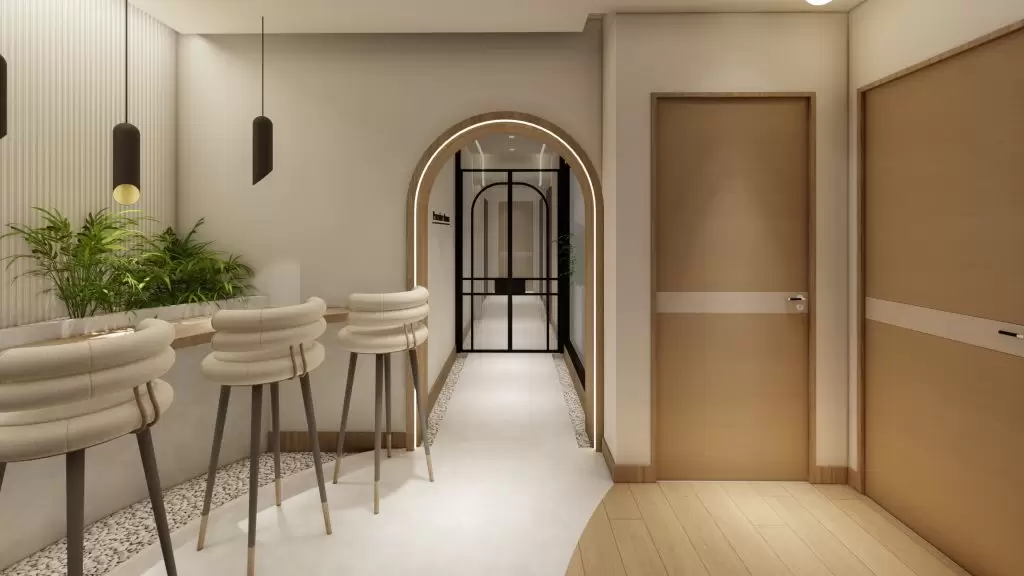
A narrow hallway can become a gallery. A wall can become a library. A storage system can become a room divider. A compact kitchen can become a sculptural line. A single piece of furniture can establish the geometry of an entire space.
That is the real lesson emerging from contemporary compact design: architectural feeling is not measured in square metres.
It is created through decisions.
The Future of Small-Space Design
As cities continue to evolve and residential spaces become increasingly valuable, the relationship between furniture and architecture is likely to become even closer. Consumers are looking for pieces that can adapt to changing lifestyles, while designers are searching for ways to make smaller environments feel generous without wasting space.
The future may not belong to rooms filled with furniture. It may belong to intelligent systems that disappear when they are not needed, transform when circumstances change and contribute to the visual identity of the home when they are visible.
This is why modularity, vertical storage, multifunctional furniture and visual restraint are becoming more than passing design trends. They are responses to a fundamental reality of modern urban life.
And there is something quietly luxurious about that.
Not the luxury of having more space, but the luxury of making the space you have feel completely yours.
“Good design does not ask how much space you have. It asks what that space could become.”

Software Developer & Writer
Hey, I'm Diva, a developer and writer blending code and creativity. I'm driven by a deep curiosity and a relentless pursuit of excellence. Join me as I craft digital solutions and captivating stories.




Leave A Comment