
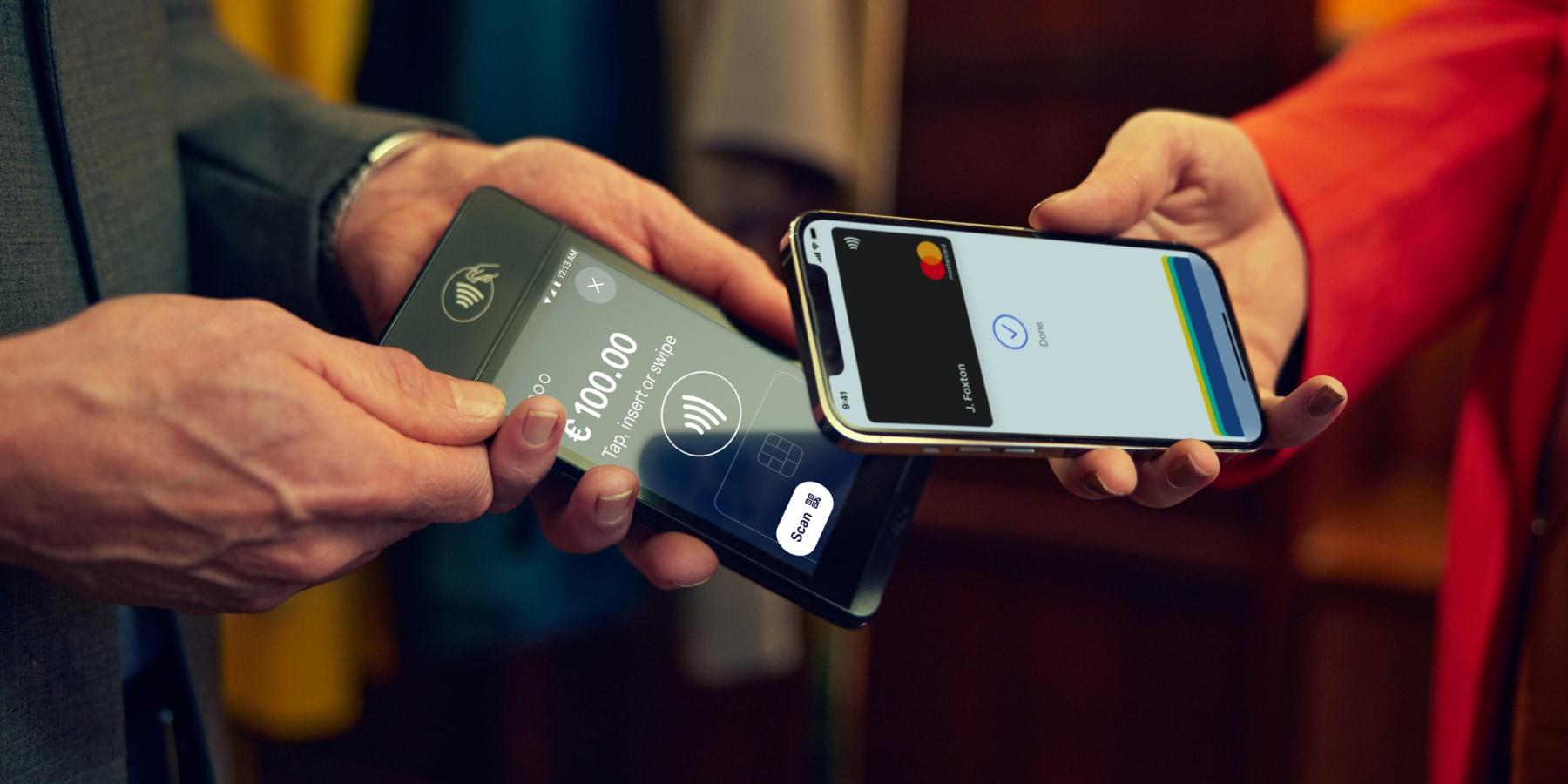
5 Wallets Powering the World
There was a time when a wallet was something you carried in your pocket. It held cash, a few cards, perhaps a photograph, and little else. Today, the wallet has moved into the smartphone and in many parts of the world, it has become far more than a digital version of the physical one.
Digital wallets now sit at the intersection of payments, commerce, identity, loyalty, travel and financial services. By 2025, the number of digital wallet users worldwide had reached roughly 4.4 billion, according to Ant International, illustrating just how deeply mobile payments have entered everyday life.
But the most interesting part of the wallet revolution is not simply how many people use these services. It is how differently the idea of a wallet has evolved across markets. In the United States and Europe, a wallet may primarily mean tapping a phone at a checkout terminal. In China, the wallet can exist inside a broader digital ecosystem where messaging, shopping, services and payments operate within the same environment. Elsewhere, wallets have helped leapfrog traditional banking infrastructure altogether.
Five platforms, in particular, illustrate how dramatically the modern wallet has changed.
Apple Pay represents one of the clearest examples of how payment technology can disappear into the background.
Rather than asking consumers to open a banking application, enter card information or physically present a card, Apple Pay turns the iPhone, Apple Watch and other compatible Apple devices into payment instruments. Users can add eligible debit, credit or prepaid cards to Apple Wallet and use them in stores, apps and on the web. Apple currently lists support across a wide range of markets spanning North America, Europe, Asia-Pacific, Latin America, the Middle East and Africa.
The real strength of Apple Pay is arguably not the payment itself. It is the way the transaction becomes part of an existing device experience. The phone people already use for communication, entertainment, navigation and work becomes the same object they use to pay for coffee, groceries, transport or an online purchase.
That creates an important shift in consumer behaviour. Instead of thinking about “using a wallet,” people increasingly think about simply paying.
Apple has also built its wallet around tokenisation and device-based authentication, allowing payment credentials to be represented digitally rather than requiring the physical card to be handed over at every transaction. The result is a payment experience designed around speed and reduced friction.
Its expansion also demonstrates how local payment ecosystems can shape global technology. Apple Pay has entered dozens of markets, but the precise services and participating banks differ from one country to another. That matters because there is no single global payment culture. A successful wallet has to adapt to local banking systems, regulations and consumer habits while maintaining a consistent experience.
The wallet, in Apple’s ecosystem, is therefore less about replacing the physical wallet with a digital replica and more about making the physical wallet feel unnecessary.
Before smartphones became the centre of digital commerce, PayPal was already tackling a fundamental problem: how do you pay online without repeatedly handing your card details to every merchant?
That simple proposition helped turn PayPal into one of the most recognisable names in digital payments.
Its significance comes from timing as much as technology. As e-commerce expanded, consumers needed a convenient way to transact across websites and borders. PayPal positioned itself as a layer between the customer and merchant, allowing people to use stored payment methods without manually entering financial details every time.
That model became particularly powerful as online shopping moved from being an occasional activity to an everyday habit.
The modern digital wallet landscape is now much more crowded, but PayPal’s original proposition remains relevant. Digital commerce depends heavily on trust, convenience and speed. Every additional form field in a checkout can create friction; every extra step between “I want this” and “purchase completed” can become an opportunity for a customer to abandon the transaction.
PayPal’s role has consequently evolved alongside commerce itself. It is no longer simply an alternative checkout button. Its ecosystem includes payment services for consumers and merchants, while its broader portfolio has expanded into areas such as peer-to-peer payments and digital financial services.
The importance of PayPal also lies in its cross-border character. Unlike wallets designed primarily around a single domestic payment infrastructure, PayPal developed around the internet’s inherently international nature.
A customer in one country could purchase from a merchant in another, creating a digital payment relationship that did not depend on both parties using the same bank.
That helped establish an idea that now feels obvious: your payment identity does not necessarily need to be tied to one physical bank branch, one card or even one country.
The online wallet became a passport for digital commerce.
If Apple Pay demonstrates how a wallet can disappear into a device, Alipay demonstrates how a wallet can become an entire digital ecosystem.
Alipay’s influence is particularly significant because of the scale of mobile commerce in China and the wider Asian market. Ant International says its Alipay+ global wallet gateway connects 1.7 billion mobile payment users across more than 70 markets, while its wider ecosystem connects merchants and consumers through cross-border payment infrastructure.
The concept is bigger than simply scanning a QR code.
The wallet can function as an entry point into a wider digital environment where payments connect with shopping, travel and other services. This is one reason Asian markets have often developed different payment behaviours from those found in Western economies.
In many markets, digital wallets evolved alongside — rather than after — traditional card infrastructure. That created an opportunity for mobile-first payment habits to develop at extraordinary scale.
Alipay has also increasingly positioned itself as a bridge between domestic wallet users and international merchants. In 2025, Alipay+ expanded its acceptance footprint to more than 100 countries and regions, connecting merchants with users of 40 international payment partners. Ant International also reported that more than 6.5 million consumers used Alipay+ cross-border payments for the first time during the first half of 2025.
That matters particularly for travel.
A traveller does not necessarily want to download a new local payment application every time they cross a border. They want the payment method they already trust to work when they arrive somewhere new.
The emerging model is therefore less about one wallet dominating every market and more about wallets becoming connected through payment networks.
In that sense, Alipay represents a new generation of digital wallet: one that is simultaneously a consumer product, a merchant gateway and a piece of cross-border financial infrastructure.
Few examples demonstrate the convergence of communication and commerce as clearly as WeChat Pay.
Tencent describes Weixin and WeChat as a digital lifestyle platform serving more than 1.4 billion monthly active users across the combined services as of the end of the first quarter of 2026. The ecosystem includes messaging, social content, mini programs, search, entertainment and payment functionality. Tencent also reports more than one billion average daily commercial payment transactions on Weixin Pay since the fourth quarter of 2019.
That scale changes what the word “wallet” means.
When communication, discovery, shopping and payment exist within the same environment, the customer does not necessarily experience them as separate activities. A conversation can lead to a purchase. A search can lead directly to a transaction. A mini program can provide a service without requiring the user to leave the ecosystem.
It is an unusually powerful model because the payment layer is supported by something even more fundamental: habitual daily engagement.
WeChat Pay has also become increasingly relevant beyond China’s domestic market. Tencent says Weixin Pay supports Chinese travellers across 78 markets and six million overseas merchants, with integrations involving local payment systems in markets including Malaysia, Thailand and Singapore.
For international commerce, this illustrates another important trend. The future of wallets may not be about replacing every local payment system. It may be about creating connections between them.
A traveller can maintain a familiar payment experience while merchants gain access to customers carrying wallets from another country.
The result is a world in which the wallet becomes less visible but more connected.
Google Wallet approaches the concept from another direction.
Instead of treating the wallet purely as a place for payment cards, Google has increasingly positioned it as a digital container for everyday credentials and passes. Payment cards can sit alongside items such as tickets, boarding passes, loyalty credentials and other supported digital documents, depending on market and device availability.
That makes the wallet relevant even when a consumer is not buying something.
The broader idea is significant because the physical wallet has never been exclusively about money. It has traditionally carried everything needed to move through everyday life: identification, tickets, memberships, payment cards and loyalty cards.
Digital wallets are gradually recreating and expanding that function.
Google’s presence also highlights the competitive nature of the global wallet market. There is no universal wallet experience. Consumers may use one service for online shopping, another for contactless payments, a local banking application for instant transfers and a separate platform for international purchases.
The result is not necessarily one winner replacing all others.
Instead, the digital economy is becoming a network of wallets, payment rails and financial platforms that increasingly need to communicate with one another.
The Bigger Story Isn’t the Wallet — It’s What Happens Inside It
The rise of digital wallets is ultimately a story about changing consumer behaviour.
A wallet used to be a physical object. Then it became a card. Then an account. Now it is becoming an interface.
That distinction matters.
The most influential wallets are not simply making payments faster. They are attempting to reduce the distance between intent and action. A customer sees something, taps something, authenticates something and moves on. The complexity is pushed behind the screen.
This is particularly important for global commerce. According to recent industry data, digital wallets accounted for more than half of global online transaction value in 2024, with adoption especially strong across Asia.
For merchants, this changes the checkout conversation. Supporting digital wallets is no longer simply about offering another payment option. It can influence conversion, international accessibility and the overall customer experience.
For consumers, the change is even more subtle.
The best wallet may eventually be the one they barely notice.
The next stage could make wallets even more deeply embedded in artificial intelligence and automated commerce. Ant International estimates that the global number of digital wallet users reached 4.4 billion in 2025 and expects that figure to exceed six billion by 2030. The company is also exploring how wallets can authenticate AI agents and support transactions initiated through emerging forms of agentic commerce.
That raises a fascinating possibility: the future wallet may not always be used directly by a person.
An AI assistant could discover a product, compare options, complete a purchase and arrange delivery while the wallet quietly handles authentication and payment in the background.
At that point, the wallet becomes something very different from the leather object it replaced.
It becomes a layer of digital trust.
Apple Pay, PayPal, Alipay, WeChat Pay and Google Wallet each represent a different interpretation of that future. One emphasises device integration. Another grew through online commerce. Another became part of a broader financial ecosystem. Another merged communication with payment. And another is expanding the very definition of what a wallet can hold.
Together, they reveal where payments are heading: away from visible transactions and toward invisible infrastructure.
The most powerful wallet may not be the one people talk about the most. It may be the one that quietly makes the entire digital experience feel effortless.
“The future of the wallet isn’t about carrying more. It’s about making everything you need feel closer.”

Software Developer & Writer
Hey, I'm Diva, a developer and writer blending code and creativity. I'm driven by a deep curiosity and a relentless pursuit of excellence. Join me as I craft digital solutions and captivating stories.


Leave A Comment