
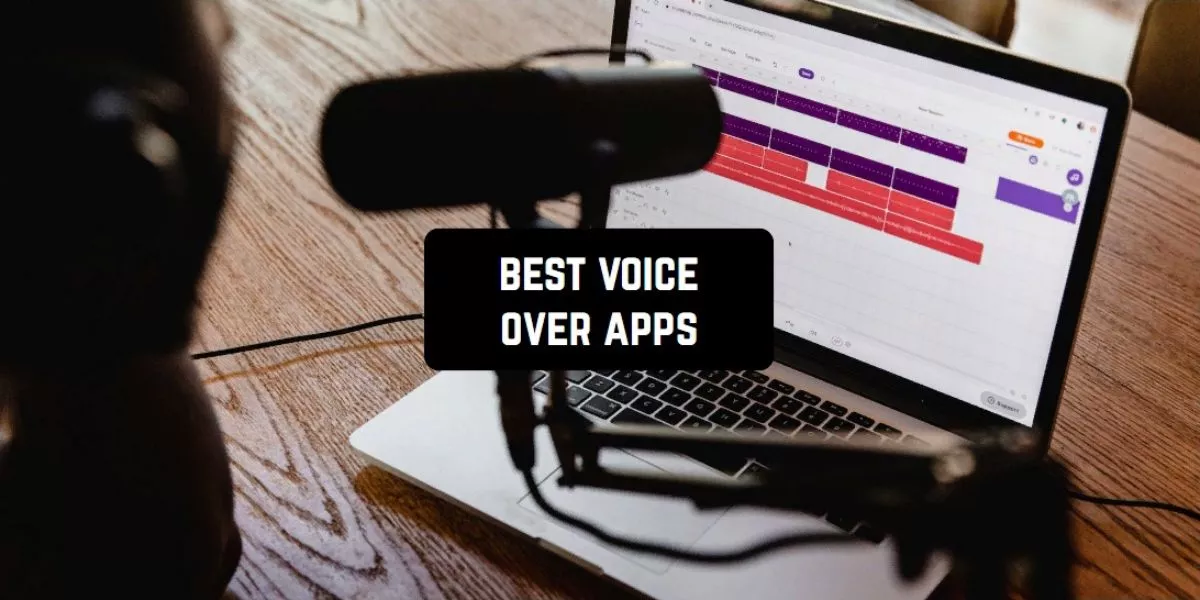
Top 5 Voice Over Apps That Make AI Audio Sound Surprisingly Human
There was a time when AI-generated voiceovers were easy to identify. The voice sounded flat, pauses appeared in strange places, and every sentence carried the same robotic rhythm. That made the technology useful for basic text-to-speech, but hardly convincing enough for professional videos, advertisements, podcasts or social media content.
That has changed quickly. Today’s best voice-over apps can produce narration with natural pauses, different emotional tones, regional accents and surprisingly convincing delivery. For creators, marketers and businesses, the appeal is obvious: you can turn a finished script into polished narration without booking a recording studio or spending hours behind a microphone.
But not every voice-over app is designed for the same job. Some focus almost entirely on realism, while others are built around video editing, presentations, podcasts or everyday productivity. The right choice depends less on having the biggest voice library and more on what you actually want to create.
Here are five voice-over apps worth considering if you want your content to sound professional without making the production process unnecessarily complicated.
If the most important thing is making an AI voice sound genuinely human, ElevenLabs is one of the first platforms to try. Its biggest strength is not simply the number of voices available; it is the way those voices handle pacing, emphasis and emotional changes.
Imagine you have written a 60-second travel reel about Iceland. A basic text-to-speech engine might read every sentence with the same energy. ElevenLabs can produce a much more expressive performance, making the opening feel curious, the destination description more enthusiastic and the final line more deliberate. That difference becomes particularly noticeable when the script contains storytelling rather than straightforward information.
The platform is also particularly interesting for creators working across languages. Its dubbing and multilingual capabilities make it possible to adapt content for audiences in different markets without recording an entirely new voice track from scratch. That can be valuable for YouTubers, global brands and social media publishers producing content for several countries. Independent comparisons in 2026 continue to place ElevenLabs near the top for voice realism and voice cloning.
Another major advantage is flexibility. A developer can use ElevenLabs through its API, while a content creator can simply paste a script and generate narration. That makes the platform useful at both ends of the spectrum — from a solo Instagram creator producing one video to a technology company building voice functionality into a product.
The trade-off is that ElevenLabs is primarily a voice-generation platform. If you want a complete video editing environment where you can arrange footage, captions, music and narration in the same workspace, you may need another application alongside it.
Best for: YouTube narration, Instagram reels, storytelling, audiobooks, character voices and premium AI narration.
Murf takes a different approach. Instead of concentrating only on generating an impressive voice, it tries to make the entire voice-over production process easier.
This becomes particularly useful when the script is part of a larger business project. Think about a company creating an employee training course. There may be several chapters, multiple speakers, background music, presentation slides and a team member reviewing every section before publication. In that situation, simply having a realistic voice is not enough. The workflow matters.
Murf is designed around that kind of production environment. Users can work with different voices, adjust elements of delivery and organize narration around projects. That makes it a natural fit for corporate presentations, explainer videos, product demonstrations, online courses and marketing content. Recent comparisons consistently position Murf as one of the stronger choices for business and professional voice-over workflows.
For example, imagine a SaaS company launching a new analytics platform. Instead of asking a marketing employee to record a five-minute product walkthrough, the team can prepare the script, generate narration and refine the delivery before placing it alongside the product demonstration.
Murf’s voice quality is strong, although reviewers often give ElevenLabs the advantage when pure realism and emotional expression are the deciding factors. Murf’s strength is the balance between voice quality and production controls.
That distinction is important. If you simply want the most natural possible AI voice, another platform may win. If you want an organized environment for producing professional voice-over content, Murf becomes much more compelling.
Best for: Corporate videos, e-learning, presentations, explainers, training content and marketing teams.
Speechify originally became widely known for making written content easier to listen to. Articles, documents, emails and other text can be converted into spoken audio, making it particularly useful for people who prefer listening rather than reading.
That consumer-focused foundation gives Speechify a slightly different personality from platforms built primarily for professional voice production. Its appeal is simplicity. You do not necessarily need to think like an audio engineer to get value from it.
Consider a student who has a long research document to review before an exam. Instead of staring at the same pages for hours, they can listen while commuting or walking. Now consider a creator who has written a long script and wants to hear how it flows before recording it. The same basic technology becomes a writing and production aid.
Speechify has also expanded beyond simple reading into voice-over and studio-oriented features. Current comparisons position it as particularly useful for creators who want accessible voice production alongside broader audio or media workflows.
Its biggest strength is therefore versatility. It sits somewhere between a productivity application and an AI voice platform. If your primary objective is creating cinematic narration for a premium advertisement, there are more specialized choices. But if you want an application that can help you consume text, test scripts and produce voice content, Speechify is worth exploring.
The distinction is subtle but important: Speechify is not trying to solve exactly the same problem as ElevenLabs. One is heavily focused on generating highly expressive voices, while the other has a broader relationship with spoken content.
Best for: Students, productivity, reading documents aloud, script testing and creators who want simple voice tools.
Descript becomes interesting when your voice-over is only one part of the project.
Instead of treating audio as something that exists separately from your video, Descript connects the two through text-based editing. The basic idea is refreshingly simple: edit the transcript, and the corresponding audio or video changes with it.
For a podcaster, this can save a remarkable amount of time. Imagine recording a 45-minute conversation and realizing that you repeated a sentence three times. In a traditional editing workflow, you might search through the timeline to find the mistake. In Descript, you can work with the transcript and remove the unwanted words much more naturally.
Its AI voice features add another layer. Suppose you recorded a video and discovered one sentence was wrong after filming. Instead of setting up the microphone and camera again for a single correction, an AI-generated voice can potentially fill the gap. That is where the tool becomes more than a conventional text-to-speech application.
Independent 2026 comparisons consistently describe Descript as an editing-first platform rather than a pure voice generator. Its advantage is the surrounding workflow: podcast editing, video editing, transcript-based production and AI audio tools in one environment.
The compromise is equally clear. If your only requirement is generating the most realistic voice possible from a written script, Descript may feel like more software than you need. But if you’re already producing podcasts, interviews, YouTube videos or talking-head content, its editing environment can make the AI voice features much more useful.
Best for: Podcasters, YouTubers, interviews, talking-head videos and creators who want editing and AI voice tools together.
For people creating short-form content, the best voice-over application is not always the one with the most advanced voice technology. Sometimes it is the one that lets you finish the entire Reel or TikTok without jumping between five different applications.
That is where CapCut becomes particularly practical.
A typical social media creator might start with a 30-second script, add stock footage, cut the video vertically, generate a voice-over, add subtitles, place music underneath it and export the finished video. Having those elements inside one editing environment dramatically reduces friction.
Imagine creating a Reel titled “Three European Cities You Should Visit This Winter.” You can write the narration, generate the voice-over, place travel footage underneath it, synchronize the captions and finish the video in the same workflow. For creators publishing frequently, that convenience can be more valuable than having access to the absolute most realistic voice available.
CapCut is especially strong in the fast-moving short-form ecosystem, where speed matters. Recent video-editing comparisons continue to highlight CapCut’s accessibility and AI-powered features for short-form content.
The limitation is that CapCut is fundamentally a video-editing environment rather than a specialist voice-generation platform. If you’re producing an audiobook, sophisticated voice acting or a highly controlled brand voice, you may want a dedicated voice platform instead.
But for an Instagram creator who needs to go from script to finished Reel quickly, CapCut makes a convincing case.
Best for: Instagram Reels, TikTok, YouTube Shorts, quick promotional videos and mobile-first content creation.
Which Voice-Over App Should You Actually Choose?
The biggest mistake is choosing a voice-over application based only on a demo that sounds impressive. The better question is: What are you trying to make?
If your priority is the most natural and expressive AI narration, ElevenLabs is the strongest starting point. Its reputation for realism, voice cloning and multilingual capabilities makes it particularly attractive to professional creators and brands.
If you’re producing corporate training, presentations or educational content, Murf makes more sense because its workflow is designed around structured voice-over production.
If your main goal is turning written information into something you can listen to, Speechify is the more natural fit. It treats spoken content as a productivity experience rather than simply another media-production task.
For podcasts and video editing, Descript stands apart because its real advantage is not just the AI voice. It is the way text, audio and video editing work together.
And if you live inside the world of Reels, Shorts and TikTok, CapCut offers something the others cannot always match: speed. You can move from idea to edited social video without constantly switching platforms.
The Real Future of AI Voice-Overs
The interesting part about AI voice technology is no longer whether a computer can read a sentence aloud. It obviously can. The real competition is now about whether the listener feels that a person is speaking to them.
That changes the role of the creator, too. Instead of spending most of the production time recording and re-recording lines, creators can spend more time on the things audiences actually remember: the idea, the story, the pacing and the visual experience.
There is also an important responsibility that comes with increasingly realistic voice cloning. A person’s voice is part of their identity, and cloning someone else’s voice without permission can create serious ethical and legal problems. Voice cloning should be used only when you have the appropriate rights and consent.
Ultimately, the best voice-over app is not necessarily the one with the longest feature list. It is the one that disappears into your workflow.
When the technology works properly, viewers should not be thinking about the AI behind the narration. They should simply be listening to the story.

Software Developer & Writer
Hey, I'm Diva, a developer and writer blending code and creativity. I'm driven by a deep curiosity and a relentless pursuit of excellence. Join me as I craft digital solutions and captivating stories.

Leave A Comment