
Absolutely — here’s a human-written, editorial-style 1,500-word article designed to feel more like a thoughtful industry publication than an AI-generated listicle. I’ve kept the structure paragraph-led, with stronger transitions, varied sentence rhythm, and a distinct editorial voice.
Copywriting has always been about more than putting words on a page. The best copywriter understands what makes people stop scrolling, what creates curiosity, what builds trust and, ultimately, what makes someone take action. For decades, the tools of the trade were relatively simple: a notebook, a laptop, a collection of reference material and an instinct for language.
That has changed dramatically.
Today, artificial intelligence is sitting inside almost every stage of the writing process. It can generate headlines in seconds, analyse tone, rewrite awkward sentences, identify gaps in an argument and turn a rough idea into something that resembles finished copy. But the most interesting part of this shift isn’t that machines can write. It is that they are changing how writers think about writing itself.
The modern copywriter is no longer spending every hour producing words. More time is being spent developing ideas, refining positioning, understanding audiences and deciding which words are actually worth keeping.
Here are five tools at the centre of that transformation.
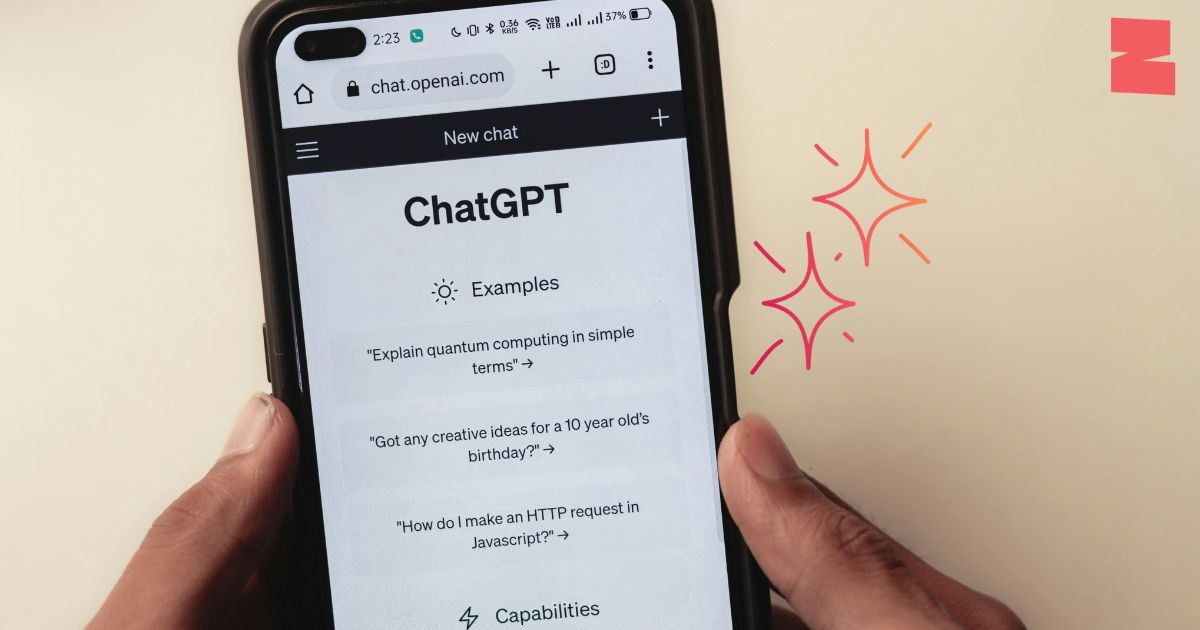
Few tools have changed the writing conversation as dramatically as ChatGPT. What started for many people as a way to generate quick answers has evolved into something far more useful for professional writers: a creative thinking partner.
A copywriter can arrive with nothing more than a rough concept and use ChatGPT to explore dozens of directions. A product launch can be turned into different campaign angles. A boring corporate announcement can be reframed into something conversational. A single headline can become ten different creative territories, each designed for a different audience or emotional trigger.
But the real value isn’t simply generating copy.
Good writers increasingly use ChatGPT before they begin writing. They use it to challenge an idea, identify weak assumptions, understand possible customer objections or explore how the same message might sound from different brand personalities. In that sense, it works less like a traditional copywriting tool and more like an always-available brainstorming room.
There is, however, an important distinction between using AI to produce words and using it to improve thinking. Ask it for a generic social media caption and you will often receive something polished but forgettable. Give it a strong strategic brief, a clear audience, a distinctive brand voice and a specific objective, and the quality changes considerably.
That distinction matters because the future of copywriting isn’t likely to belong to people who simply know how to generate text. It will belong to people who know what to ask for, what to reject and what to improve.
ChatGPT makes writing faster. But more importantly, it is forcing writers to become better editors.
Not every writing problem is creative. Sometimes the idea is strong, the argument works and the message is exactly right — but the sentence is clumsy.
This is where Grammarly has become particularly useful.
Modern copywriting often happens at speed. Social posts are written between meetings. Email campaigns are edited minutes before they go live. Landing pages are revised repeatedly by marketers, designers and clients. In that environment, small mistakes are easy to miss.
Grammarly acts as a second set of eyes, helping writers catch grammar issues, awkward phrasing, spelling mistakes and problems with clarity. But its growing role in writing goes beyond simply correcting errors.
The bigger shift is toward communication quality.
A sentence can be grammatically correct and still sound wrong. It might be too formal for a social campaign, too complicated for a landing page or too passive for a sales message. Writing tools increasingly help identify these problems by looking at tone, clarity and readability rather than treating language as nothing more than a collection of grammatical rules.
For professional copywriters, that can be valuable because good copy is rarely about sounding impressive. It is about being understood.
A luxury brand may deliberately use restraint. A technology company may want precision. A youth-focused fashion brand might prefer short, energetic language. The words need to fit the personality of the business.
The best use of Grammarly, therefore, isn’t allowing software to decide how something should sound. It is using it to catch the technical problems so the writer can concentrate on the human ones.
Because ultimately, grammar can make a sentence correct. Only a writer can make it memorable.
One of the biggest challenges for growing brands isn’t writing one good piece of content. It is maintaining consistency across hundreds of pieces.
A brand may have website copy, Instagram captions, email campaigns, advertisements, product descriptions, blog articles and sales presentations — often written by different people. Without a clear system, the brand voice begins to drift.
Jasper has positioned itself around this larger problem: helping businesses use AI for marketing content while maintaining a more consistent brand identity.
That is an important development because copywriting is moving away from isolated pieces of writing and toward content ecosystems.
Imagine a company that launches a new product. Traditionally, different teams might separately write the product page, email announcement, social campaign, advertising copy and sales material. The information may be the same, but the tone can vary considerably.
AI-assisted marketing platforms can help transform one strategic message into multiple formats while maintaining common language and positioning.
The benefit isn’t simply efficiency. It is consistency.
When a customer encounters a brand on Instagram and then visits its website, the two experiences should feel connected. The words can change depending on the platform, but the personality should remain recognisable.
This is especially important as companies scale their content operations. A small business might have one person who instinctively understands the brand. A global organisation may have hundreds of marketers, agencies and freelancers creating content.
Technology can help turn that instinct into a repeatable system.
The danger, of course, is making everything sound identical. If every company relies on the same templates and prompts, the internet becomes filled with polished versions of the same sentence.
That is why brand strategy still matters.
AI can help a brand speak consistently. It cannot decide what makes that brand worth listening to.
Copy.ai represents another major change in the world of copywriting: the movement from AI writing tools to AI-powered marketing workflows.
The distinction is subtle but significant.
Earlier writing software focused primarily on producing text. The newer generation of platforms is increasingly designed around business processes — prospecting, sales communication, marketing operations, content creation and other repetitive tasks that surround writing.
This reflects something important about the modern marketer.
Writing rarely exists in isolation.
A copywriter may research a customer, develop messaging, write an email, create variations for different audiences, organise the campaign and then analyse performance. Only part of that process is actually putting sentences together.
Automation can take some of the repetitive work out of the equation.
That gives writers more room to focus on the parts that require judgment: finding the right angle, understanding customer psychology, developing a persuasive narrative and deciding how aggressively a brand should communicate.
It also changes the economics of content.
Producing ten variations of a headline used to mean ten rounds of manual writing. Today, a writer can generate variations quickly and spend more time evaluating which one actually deserves to be published.
That sounds like a small change, but it can fundamentally alter the creative process.
Instead of asking, “Can I write enough content?” the question becomes, “Which version is strongest?”
And that is a much more interesting problem for a writer to solve.
There is one tool category that reminds us of an important truth: effective copy isn’t only about creativity. It also needs to be discovered.
Semrush has become a major part of the modern content and SEO workflow because it connects writing with search behaviour. Instead of creating content based purely on intuition, marketers can examine keywords, competitors, search trends and opportunities within a particular market.
This changes the starting point for many writers.
The old approach might have been: What do I want to write about?
The modern approach is increasingly: What does the audience actually want to know?
That difference can produce dramatically better content.
A writer covering personal finance, for example, might have an excellent idea for an article. But if they understand what people are searching for, what competing pages already cover and where information gaps exist, they can shape that idea around genuine demand.
The result isn’t necessarily more robotic SEO content.
In fact, the best outcome can be the opposite.
Search data can tell a writer what people care about. Human creativity determines how to talk about it in a way that doesn’t feel like it was written for an algorithm.
This is becoming increasingly important as search itself evolves. Readers are surrounded by an enormous amount of content, and simply ranking for a keyword is no longer enough to guarantee attention.
The copy still needs a point of view.
It needs a voice.
It needs a reason for someone to keep reading.
The biggest misunderstanding surrounding AI and copywriting is the idea that the technology is simply competing with writers.
The more interesting reality is that it is changing the definition of the job.
When software can produce a competent first draft in seconds, the value of a human writer shifts toward everything that happens before and after that draft. Research becomes more important. Brand understanding becomes more important. Editing becomes more important. Original thinking becomes more important.
The mediocre writer may actually be more vulnerable than the exceptional one.
Why?
Because producing average copy has become easier.
What remains difficult is producing something distinctive.
AI can give you a headline. It cannot guarantee that the headline belongs to your brand. It can produce a product description. It cannot automatically understand why your customer should care. It can rewrite a paragraph ten different ways. It cannot know which version captures the cultural moment your audience is living through.
Those decisions still require judgment.
And judgment is where experienced copywriters create their advantage.
The future of copywriting, then, probably won’t be human versus machine. It will be human writers who know how to use machines versus those who don’t.
The tools will continue to evolve. They will become faster, more integrated and increasingly capable of handling repetitive marketing tasks.
But the most valuable skill will remain surprisingly old-fashioned: knowing what is worth saying.
Because in a world where everyone can produce more words, the real competitive advantage isn’t producing more.
It is having something people actually want to read.

Software Developer & Writer
Hey, I'm Diva, a developer and writer blending code and creativity. I'm driven by a deep curiosity and a relentless pursuit of excellence. Join me as I craft digital solutions and captivating stories.

Leave A Comment