
AI Coding Assistants Compared: GitHub Copilot vs Cursor vs Claude vs ChatGPT – Which One Should Developers Choose in 2026?
Artificial Intelligence has transformed software development faster than almost any other profession. What started as simple autocomplete suggestions has evolved into AI-powered coding assistants capable of writing complete applications, debugging complex codebases, explaining algorithms, generating documentation, reviewing pull requests, and even acting as collaborative programming partners.
Today, developers have more choices than ever. Four names dominate the conversation—GitHub Copilot, Cursor, Claude, and ChatGPT. Each tool approaches software development differently, making it difficult for beginners and experienced developers alike to decide which one deserves a place in their workflow.
Some prioritize deep IDE integration, while others excel at reasoning through complicated programming problems. Some are designed specifically for coding, whereas others are versatile AI assistants capable of handling research, documentation, planning, and software architecture alongside development.
If you’re wondering which AI coding assistant offers the best value in 2026, this detailed comparison explores their strengths, weaknesses, pricing, ideal use cases, and overall performance.
The Rise of AI Coding Assistants
Software engineering has always involved repetitive tasks. Developers spend countless hours writing boilerplate code, fixing syntax errors, searching Stack Overflow, reading documentation, reviewing APIs, and debugging applications. AI coding assistants dramatically reduce this workload by acting as an intelligent partner throughout the development lifecycle.
Instead of replacing developers, modern AI tools amplify productivity. They generate cleaner code faster, suggest improvements, identify bugs before deployment, explain unfamiliar codebases, and even help developers learn new programming languages.
Whether you’re building web applications, mobile apps, backend services, machine learning models, or automation scripts, AI assistants have become an essential productivity tool.
GitHub Copilot: The Original AI Coding Assistant
GitHub Copilot remains one of the most recognizable AI coding tools. Built through a collaboration between GitHub and OpenAI, Copilot was among the first mainstream AI assistants integrated directly into popular code editors.
Its biggest strength lies in real-time code completion. As developers type, Copilot predicts the next few lines—or sometimes entire functions with impressive accuracy. Instead of interrupting the coding flow, suggestions appear instantly inside the editor.
Copilot works exceptionally well for repetitive programming tasks such as writing CRUD operations, generating API routes, creating unit tests, handling JSON parsing, or implementing common algorithms.
The tool integrates seamlessly with Visual Studio Code, Visual Studio, JetBrains IDEs, and Neovim, making adoption effortless for existing developers.
Pros
Cons
GitHub Copilot is best suited for developers who spend most of their time inside an IDE and want intelligent code completion without changing their workflow.
Cursor: The AI-First Code Editor
Cursor represents the next generation of AI-powered development environments. Instead of simply adding AI to an existing editor, Cursor was built around AI from the beginning.
Based on Visual Studio Code, Cursor feels familiar while introducing significantly more intelligent features.
One of Cursor’s strongest capabilities is understanding entire codebases rather than isolated files. Developers can ask questions such as:
“Where is user authentication implemented?”
“Refactor this API using async functions.”
“Explain how payment processing works.”
Cursor scans the project and responds with contextual answers while making code changes directly.
This makes it particularly valuable for large enterprise projects where understanding thousands of files manually is unrealistic.
Cursor also supports AI-powered refactoring, inline edits, documentation generation, debugging assistance, and multi-file modifications.
Pros
Cons
Cursor has become especially popular among startup engineers and full-stack developers working on complex applications.
Claude: The Best AI for Reasoning Through Code
Claude approaches coding differently from dedicated IDE assistants.
Instead of focusing primarily on autocomplete, Claude excels at reasoning.
When developers face difficult architecture problems, confusing bugs, security vulnerabilities, or large-scale system design questions, Claude often produces exceptionally thoughtful responses.
Its long context window allows it to analyse enormous codebases, technical documentation, API references, and architecture diagrams within a single conversation.
Claude is also excellent at explaining unfamiliar code. Junior developers frequently use it to understand legacy software because its explanations tend to be detailed and educational rather than simply generating replacement code.
Developers working on Python, Rust, Go, JavaScript, TypeScript, Java, C++, and data science projects often appreciate Claude’s ability to maintain context throughout lengthy technical discussions.
Pros
Cons
Claude shines when solving difficult engineering problems rather than simply accelerating typing.
ChatGPT: The Most Versatile AI Developer Assistant
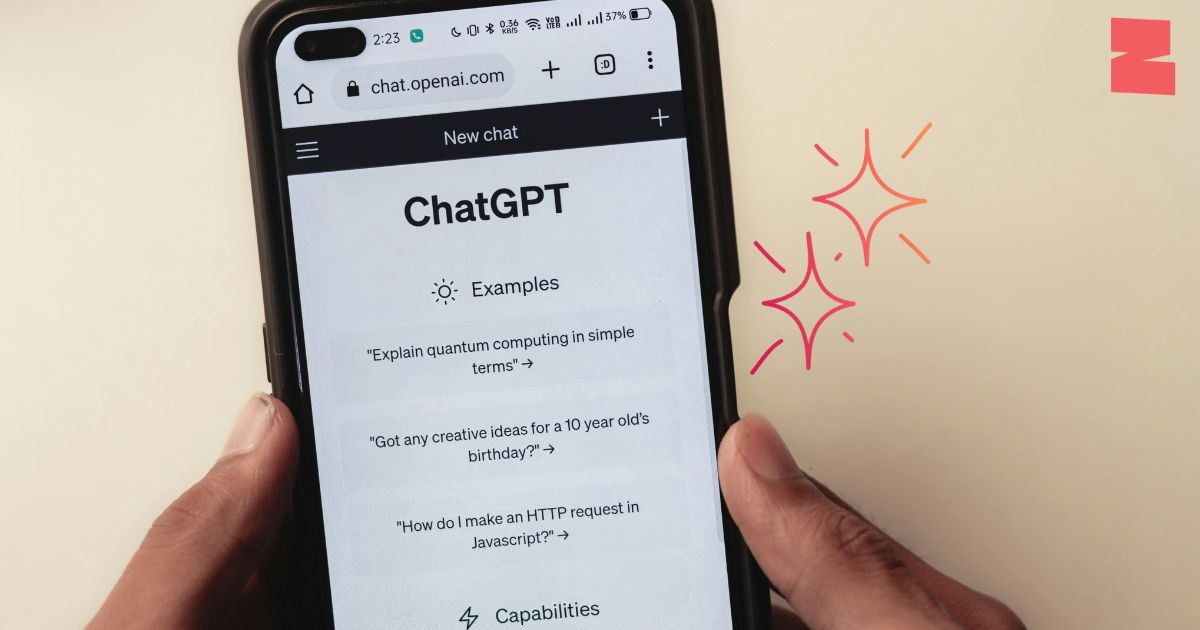
ChatGPT has evolved far beyond a conversational chatbot. It has become one of the most comprehensive AI development assistants available.
Unlike many coding-focused tools, ChatGPT supports the entire software development lifecycle.
Developers use ChatGPT to:
Its flexibility makes it valuable for beginners, freelancers, software engineers, DevOps professionals, technical writers, and engineering managers alike.
With support for multiple programming languages and strong reasoning capabilities, ChatGPT works well even outside traditional software engineering, including automation, data analysis, cybersecurity, cloud computing, and AI development.
Unlike editor-specific assistants, ChatGPT can assist before coding begins and after deployment is complete.
Feature Comparison
| Feature | GitHub Copilot | Cursor | Claude | ChatGPT |
| IDE Integration | Excellent | Excellent | Limited | Good |
| Code Completion | Excellent | Excellent | Good | Good |
| Debugging | Good | Excellent | Excellent | Excellent |
| Code Explanation | Good | Excellent | Outstanding | Excellent |
| Documentation | Good | Excellent | Excellent | Excellent |
| Large Codebase Understanding | Moderate | Excellent | Outstanding | Excellent |
| Software Architecture | Moderate | Good | Excellent | Excellent |
| Learning Programming | Good | Good | Excellent | Excellent |
| Productivity | Excellent | Excellent | Very High | Very High |
Which Assistant Produces Better Code?
Code quality depends heavily on the task.
GitHub Copilot performs exceptionally well for repetitive programming patterns because it predicts code while developer’s type.
Cursor produces impressive project-aware modifications by understanding relationships across multiple files.
Claude generates cleaner, more thoughtful solutions for difficult engineering problems, particularly when architecture or debugging requires careful reasoning.
ChatGPT combines reasoning with flexibility, making it capable of producing complete solutions while also explaining why specific implementations are preferable.
For enterprise software development, the difference often comes down to workflow rather than raw intelligence.
Best AI Assistant for Beginners
New programmers have different requirements than experienced engineers.
Beginners need explanations, tutorials, examples, debugging guidance, and educational conversations rather than simply generated code.
ChatGPT and Claude excel here because they explain concepts in depth instead of merely suggesting syntax.
Copilot, while extremely useful, assumes developers already understand the generated code.
Cursor sits somewhere in the middle, providing intelligent edits alongside contextual explanations.
Best AI Assistant for Professional Developers
Pricing Comparison
Pricing changes frequently, but the overall positioning remains relatively consistent.
GitHub Copilot offers affordable subscriptions aimed at individual developers and teams.
Cursor provides both free and premium plans with higher usage limits and advanced AI features available through paid subscriptions.
Claude offers free access with premium tiers that unlock larger usage limits and advanced capabilities.
ChatGPT includes a free version alongside paid plans that provide access to more capable models, higher usage limits, faster performance, and additional productivity features.
For developers coding every day, paid plans generally provide enough productivity gains to justify the monthly cost.
Which AI Coding Assistant Should You Choose?
There is no universal winner because every developer has different priorities.
Choose GitHub Copilot if your primary goal is lightning-fast autocomplete and seamless IDE integration.
Choose Cursor if you work with large projects and want an AI-powered code editor capable of understanding your entire repository.
Choose Claude if you frequently solve complex engineering problems, review architecture, or need detailed technical explanations.
Choose ChatGPT if you want an all-purpose AI assistant that supports coding, debugging, documentation, planning, learning, research, automation, and software design in one platform.
Many software engineers now use a combination of these tools—for example, Copilot or Cursor for day-to-day coding inside the IDE, and Claude or ChatGPT for deep debugging, architecture discussions, and documentation.
Final Verdict
AI coding assistants have fundamentally changed how software is developed. Instead of replacing developers, they reduce repetitive work, accelerate learning, improve code quality, and enable engineers to focus on solving meaningful problems.
GitHub Copilot remains the leader in intelligent code completion, Cursor pushes the boundaries of AI-native development environments, Claude delivers exceptional reasoning for complex programming challenges, and ChatGPT stands out as the most versatile assistant across the entire software development lifecycle.
Rather than asking which tool is objectively the best, the better question is which assistant matches your workflow. If your work revolves around writing code quickly inside an IDE, Copilot or Cursor may be the ideal choice. If your responsibilities include architecture, debugging, technical writing, and learning new technologies, Claude and ChatGPT offer broader capabilities.
As AI models continue to improve, these assistants will become even more deeply integrated into software engineering, making developers faster, more productive, and better equipped to build increasingly sophisticated applications. Choosing the right AI coding assistant today can significantly enhance both your productivity and your development experience in the years ahead.

Software Developer & Writer
Hey, I'm Diva, a developer and writer blending code and creativity. I'm driven by a deep curiosity and a relentless pursuit of excellence. Join me as I craft digital solutions and captivating stories.


Leave A Comment